
 Arsenal
 Aston Villa
 Chelsea
 Crystal Palace
 Everton
 Fulham
 Leeds United
 Liverpool
 Manchester City
 Manchester United
 Newcastle United
 Nottingham Forest
 Sunderland
 Tottenham Hotspur
 West Ham United
 Wolverhampton Wanderers


Martin Odegaard could be out of action for up to six weeks with a medial collateral ligament injury, leaving Arsenal to reckon with his absence both on the pitch and in the finance department.
The elegant Norwegian playmaker, 26, had hit a purple patch for Arsenal in recent weeks, making the MCL setback he suffered in Saturday’s 2-0 win over West Ham all the more galling for Mikel Arteta.
Speaking about Odegaard’s injury, Arteta said: “Immediately, he was uncomfortable. I just spoke to him. He’s not positive about it. He’s got a brace on. We’ll have to wait and see from the doctors, but we haven’t been very lucky with that either.
“We’ll find solutions, but obviously he’s our captain and is a player that gives us a completely different dimension with the things that he can do, especially in attacking.”
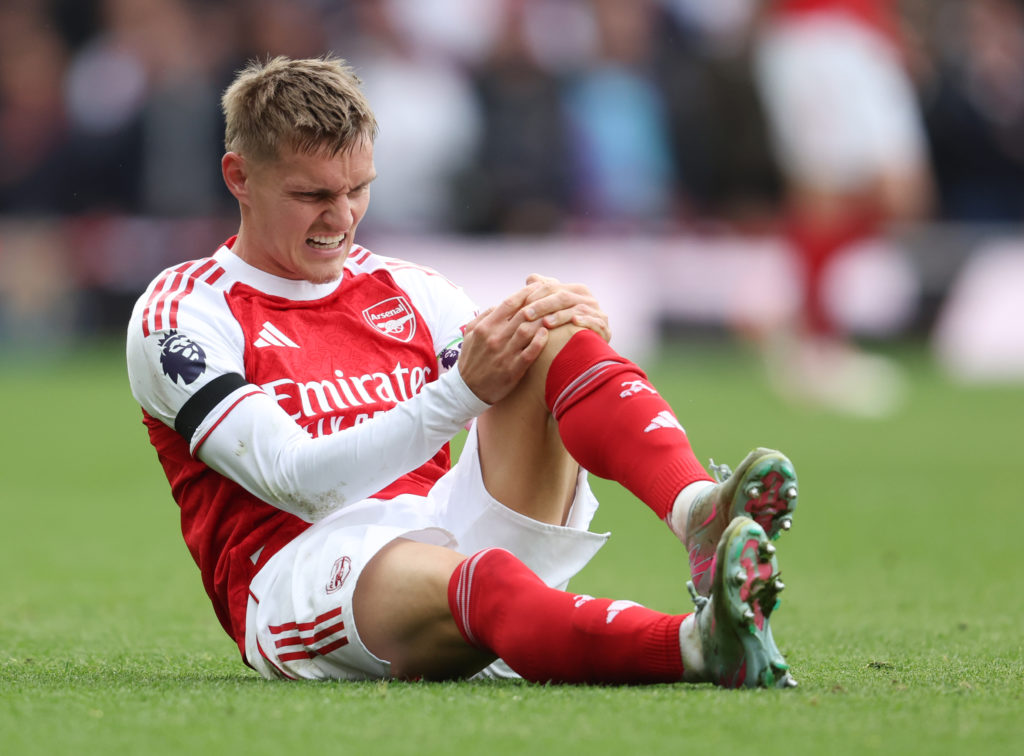
Martin Odegaard, who has now withdrawn from the Norway squad that was due to face Israel and New Zealand in the international break, is one of Arsenal’s best-paid players.
After signing a new deal almost exactly two years ago, he now reportedly earns £300,000 every week. That equates to £15.6m annually, or nearly £20m with his amortisation costs factored in too.
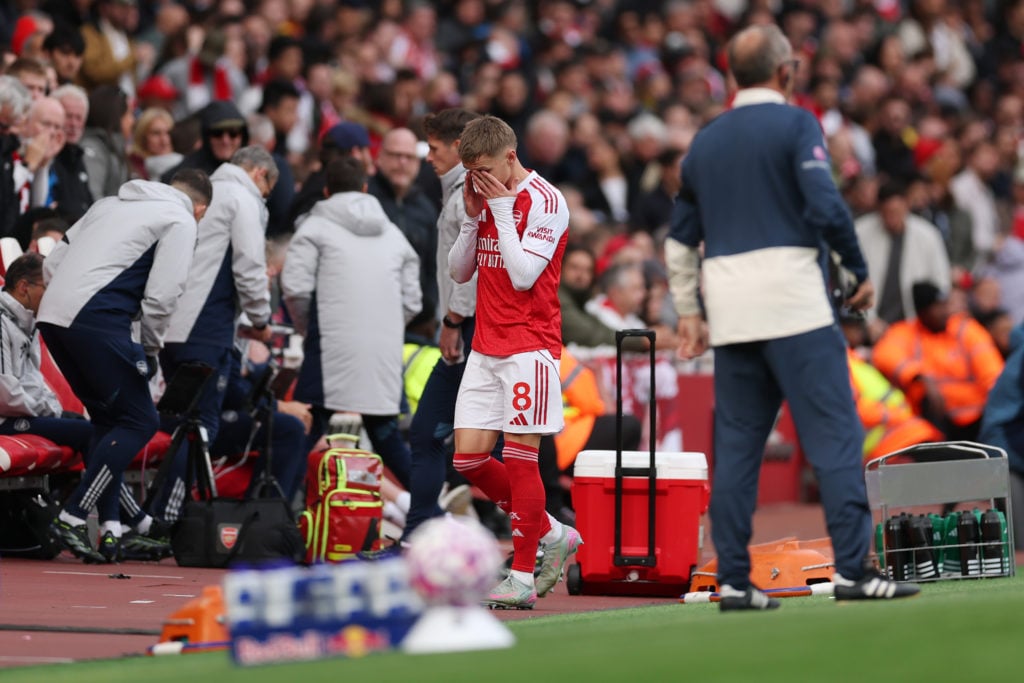
Odegaard’s withdrawal following his collision with Crysencio Summerville marked the third time this term that he has been forced off before half time, the two previous occasions because of shoulder injuries.
Declan Rice, who gave Arsenal the lead against his former side at the Emirates, was also later substituted with a back injury, although he is still expected to join up with the England squad as planned. Gabriel Jesus, Noni Madueke and Kai Havertz meanwhile are all out with knee injuries of varying severity, while Piero Hincapie is sidelined with a groin issue.
Injuries defined Arsenal’s season in 2024-25 and dictated their transfer policy in the summer. Sporting director Andrea Berta focused on depth, in contrast to Liverpool hoovering up Hollywood signings.
- READ MORE: Arsenal’s strangest injury once saw key star suffer season-ending problem in training ground showers
Exclusive: Data reveals financial impact of injuries on Arsenal
Data previously shared with TBR Football by sports scientist and founder of the Premier Injuries website Ben Dinnery shows that Premier League clubs lost £230m to injuries last season.
That was the impact of salaries paid to sidelined players.
Odegaard, for example, could be out for anywhere between one and six weeks depending on the grade of his MCL injury, according to Physio Scout on X.
If Odegaard’s setback is at the upper end of that range, Arsenal will pay £1.8m to a player unavailable for selection, although at least one week of that will cover the international break.
Dinnery has also told TBR Football that upwards of £45m is spent across the English top flight each season to mitigate injury risk, with an outsized chunk of that figure borne by elite clubs like the Gunners.
That means costs around £275m are spread between the 20 Premier League clubs, or almost 4.5 per cent of the league’s total revenue of £6.3bn.
Only three clubs sustained more injuries and lost more days to injury in 2024-25 than Arsenal, meanwhile, whose players were sidelined for a cumulative 1,297 days.
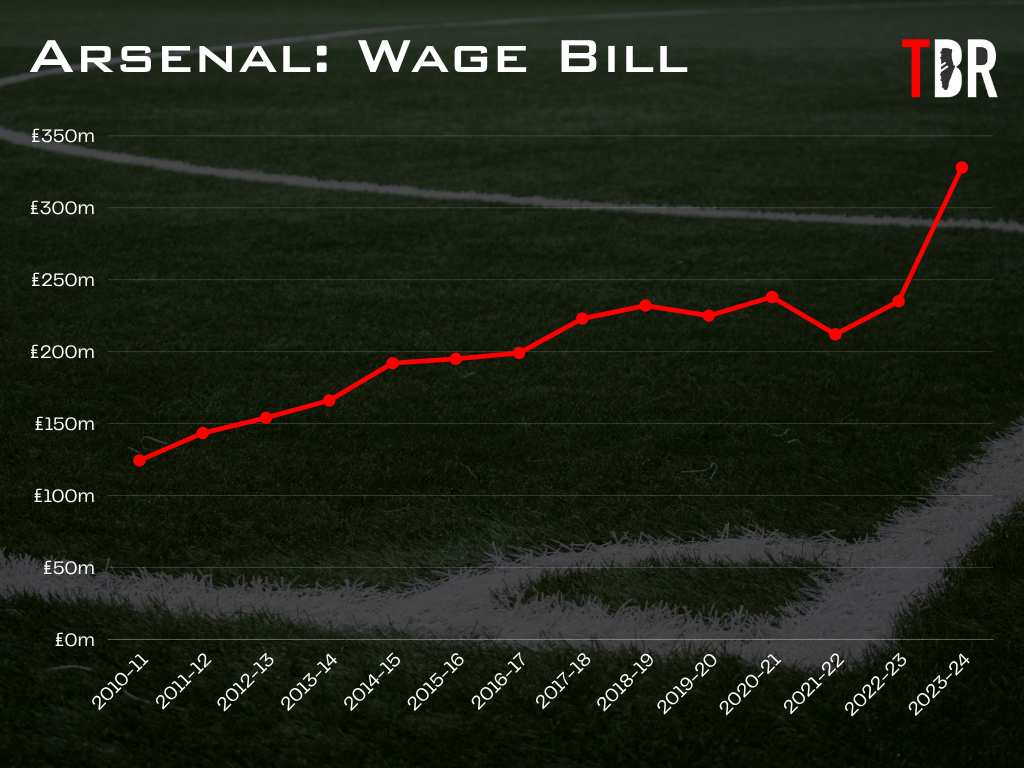
Their most recent published annual wage bill was just under £328m. Once the figures for 2025-26 are released, the Gunners are expected to get near the £400m barrier, depending on performance this term.
Most football finance experts suggest that 70-75 per cent of that figure is attributable to the first team.
Taking the latest publicly available data from 2023-24, that equates to approximately £245m in first-team costs. That’s an average salary of somewhere in the region of £9m when divided across 25-30 players.
Over 365 days, that’s an average wage of just under £25,000 per day. Multiplied by the 1,297 days they lost to injury in 2024-25, that implies that Arsenal paid almost £32m to injured players last term.
In reality, the number will be higher given that the club’s injuries skewed towards their higher earners, as well as the fact that the wage bill is expected to have risen significantly since 2023-24.
These are crude calculations, but the rough figures give a sense of the cost of injuries to Arsenal and their peers in the Premier League, as well as raising questions about the physical demands placed on players.
Should Arsenal be playing fewer matches? FIFPro lawsuit, Stan Kroenke’s philosophy and dressing room stance explained
Not all of Arsenal’s injuries are workload-related, but the number of muscle and fatigue-linked issues is trending upwards in elite football.
While they did not compete at FIFA’s inaugural version of its new 32-team Club World Cup this summer, the project had the support of owner Stan Kroenke.
The billionaire also backed the expansion of the Champions League, which means the North Londoners are guaranteed at least two extra matches this season compared to the old format.
For some time, the conventional wisdom among the Premier League’s ownership class was that more matches equals more revenue opportunities.
However, there is now a growing school of thought that the physical impact of football’s bloated calendar might actually be costing clubs like Arsenal more than it is generating in revenue.
Arsenal’s transfer strategy this summer is a tacit admission that having a first-team squad deep with players who can go straight into the starting XI is a necessity in the modern game.
That leads to a growing wage bill, which is – almost without exception – a club’s biggest expense each and every single year. When the majority of clubs lose money annually, that’s a problem.
For that reason, some club owners have tentative aspirations to cut the number of matches their teams play. Or, at least, the number of ‘low-quality’ (read: low-revenue) matches.
Scaling back the League Cup and scrapping FA Cup replays are perhaps the thin end of the wedge, but some teams would ideally like to see the Premier League reduced to 18 or even 16 teams.
And while perhaps for different reasons, broad sentiments about the matchday calendar are shared in dressing rooms at the Emirates and beyond.
Arsenal’s Jurrien Timber described fixture congestion as “dangerous” last season and talk of a possible player strike is growing louder.
Timber’s quotes were cited in a recent workload report from player union FIFPro, which also highlighted that Arsenal had travelled nearly 11,500 miles in their pre-season tour of the United States.
There could even be a legal reckoning, with FIFPro having filed a complaint against with the European Commission over FIFA’s expansion of the international match calendar.
And in a World Cup season, where Odegaard could be one of 15-20 Arsenal players playing, debates over the right balance of player welfare and commercial interests will only continue to gather momentum.
Receive weekly football news and updates to your mailbox