
 Arsenal
 Aston Villa
 Chelsea
 Crystal Palace
 Everton
 Fulham
 Leeds United
 Liverpool
 Manchester City
 Manchester United
 Newcastle United
 Nottingham Forest
 Sunderland
 Tottenham Hotspur
 West Ham United
 Wolverhampton Wanderers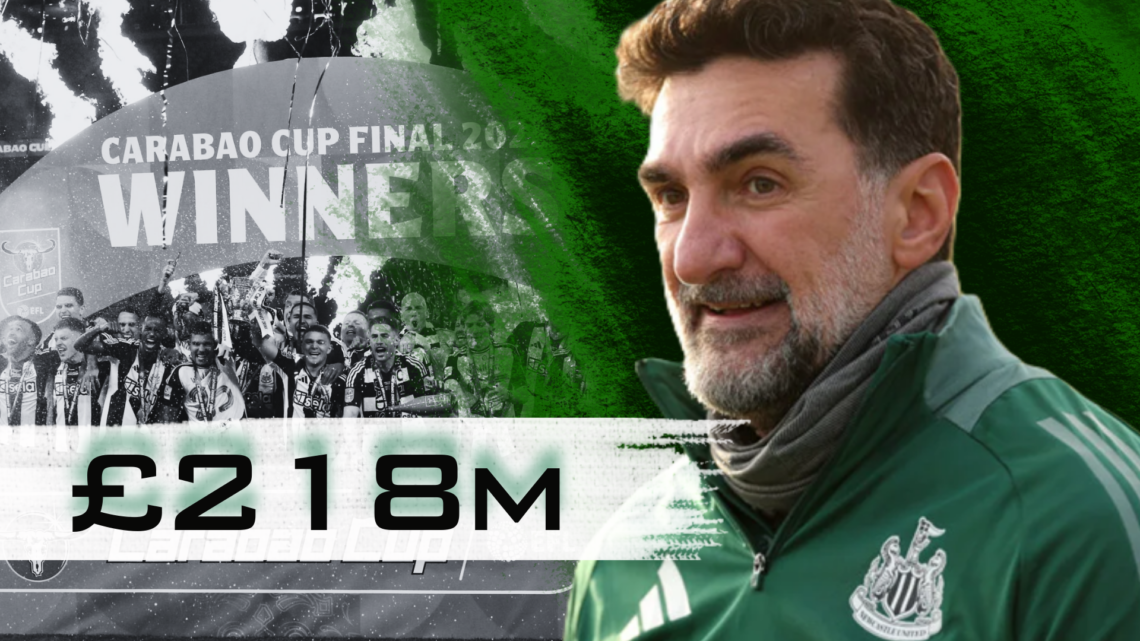


For a few wondrous hours last Sunday, Newcastle United fans must have forgotten all about PSR, FFP, APT or any of the financial and regulatory initialisms that have acted as an anchor for PIF’s ambitions.
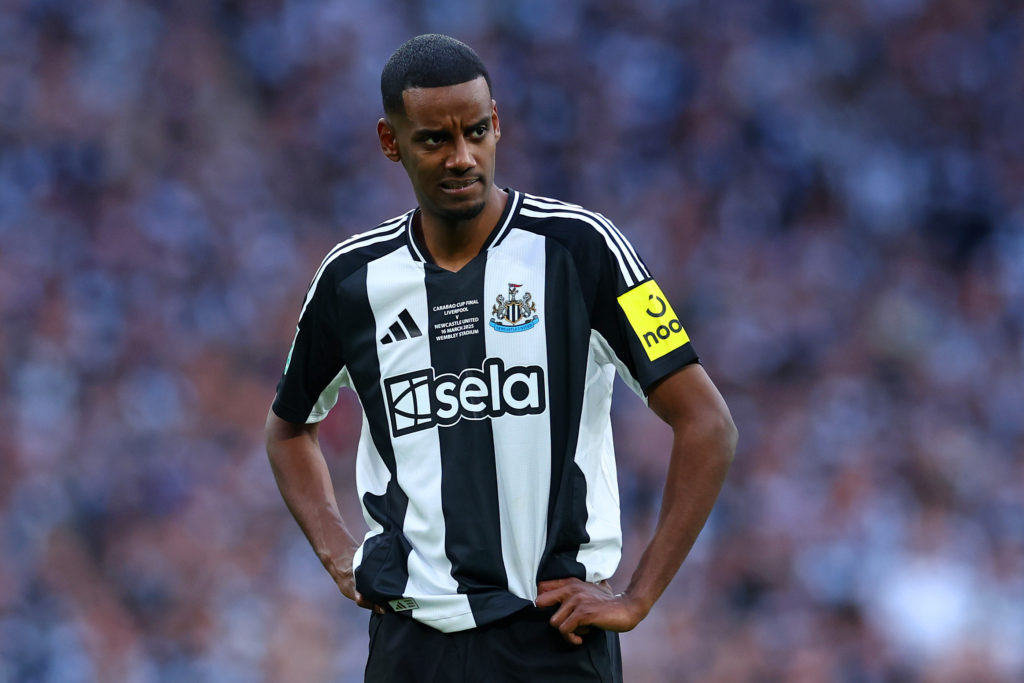
Eddie Howe’s side’s League Cup triumph at Wembley was their first domestic silverware in 70 years and, the Saudi Public Investment Fund hopes, a beachhead for more glory in the future.
Eight of the 11 that started the final against Liverpool were recruited since the takeover in October 2021, an event which many supporters expected would herald blockbuster signings galore.
However, the past three-and-a-half years have instead seen the Saudis and their enforcers at St James’ Park adopt a more measured approach – partly by design, and partly by accident.
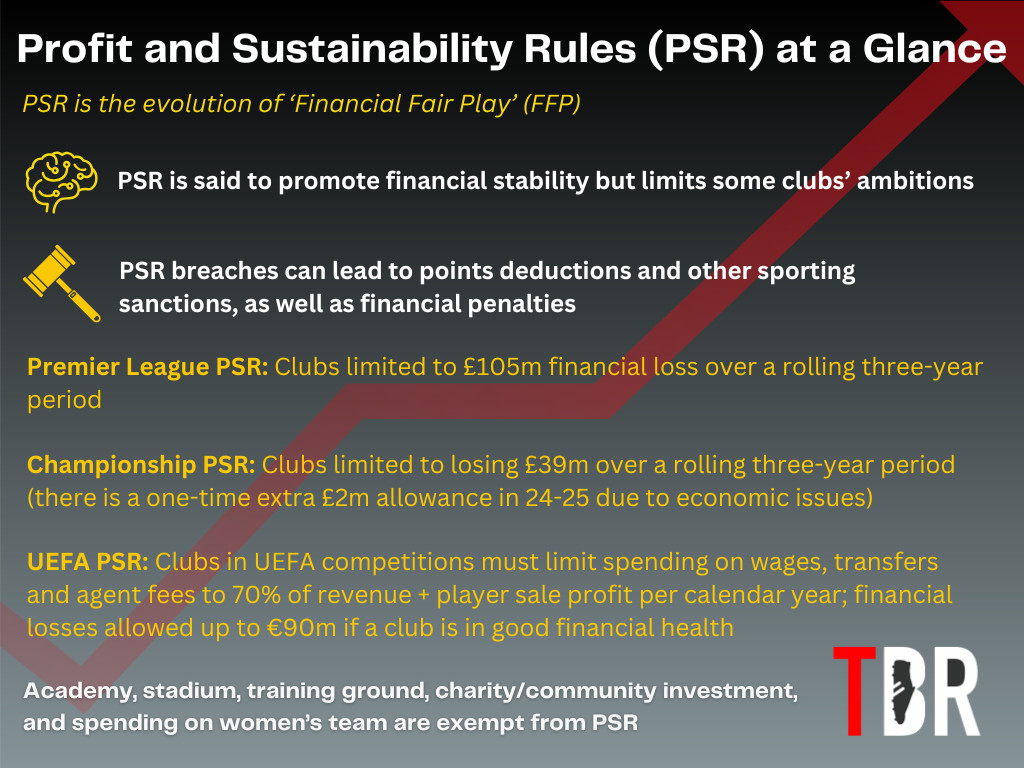
Instead of pouncing when big names became available, Newcastle have opted for value in a transfer market wherein, because of Profit and Sustainability Rules, the chips have been stacked against them.
Their recruitment has been near faultless as a result and, by any measure, the PIF project on Tyneside is well, well ahead of schedule.
They may well play in the Champions League for a second time in the PIF era next season, which will generate more revenue and more leeway for the bottom line, carving out more PSR headroom.
The Saudis have done a remarkable job increasing the Magpies underlying financials, albeit with a little help from PIF-owned sponsors Noon and Sela, plus the PR benefit of simply not being Mike Ashley.
However, it’s not as though all that Eddie Howe has achieved at St James’ Park has been on a shoestring budget.
On a raw, net basis, only four Premier League teams – Chelsea, Manchester United, Tottenham and Arsenal – have spent more than Newcastle in the last five seasons.
| Club | Net spend in last five seasons |
| Chelsea | -£784m |
| Manchester United | -£565m |
| Tottenham | -£472m |
| Arsenal | -£460m |
| Newcastle | -£350m |
But net spend can be somewhat misleading given that it only accounts for headline signing and sale fees and not player remuneration, which is – almost without exception – a club’s biggest expense every season.
A club’s wage bill is usually a far more reliable predictor of where they will finish in the table, though the likes of Manchester United and Tottenham are proof in case that there are outliers.
As it happens, Newcastle revealed in the build-up to the League Cup final that they have smashed another glass ceiling as far as attracting the best players is concerned.
Newcastle United break ‘Big Six’ wage stranglehold
The ‘Big Six’ encompasses the two Manchester clubs, Liverpool, Chelsea, Arsenal and Tottenham.
The prestige of the Big Six is not necessarily in terms of their success on the pitch bur rather their firepower off it.
There have only been a handful of occasions in the last decade where any of those six clubs have finished outside the top-10 in terms or revenue generating clubs worldwide.
Their revenues have given them increased resources for recruitment and retention, both in terms of PSR leeway and the cold, hard cash available to them.
Now, however, for the first time since the term ‘Big Six’ was coined in the early 2010s, Newcastle have broken their stranglehold in terms of wages paid to players.
Newcastle’s accounts for 2023-24, which they released earlier this month, show that they paid out £218m in total. That was fractionally higher than Spurs, whose figure was £217m.
Aston Villa meanwhile are also expected to have broken the oligopoly, judging by the unaudited figures from Deloitte’s 2025 Football Money League.
Newcastle’s total squad cost – a measure by which Premier League PSR is expected to be assessed as a percentage of revenue after 2025-26, made up of amortisation and wages – was £316m.
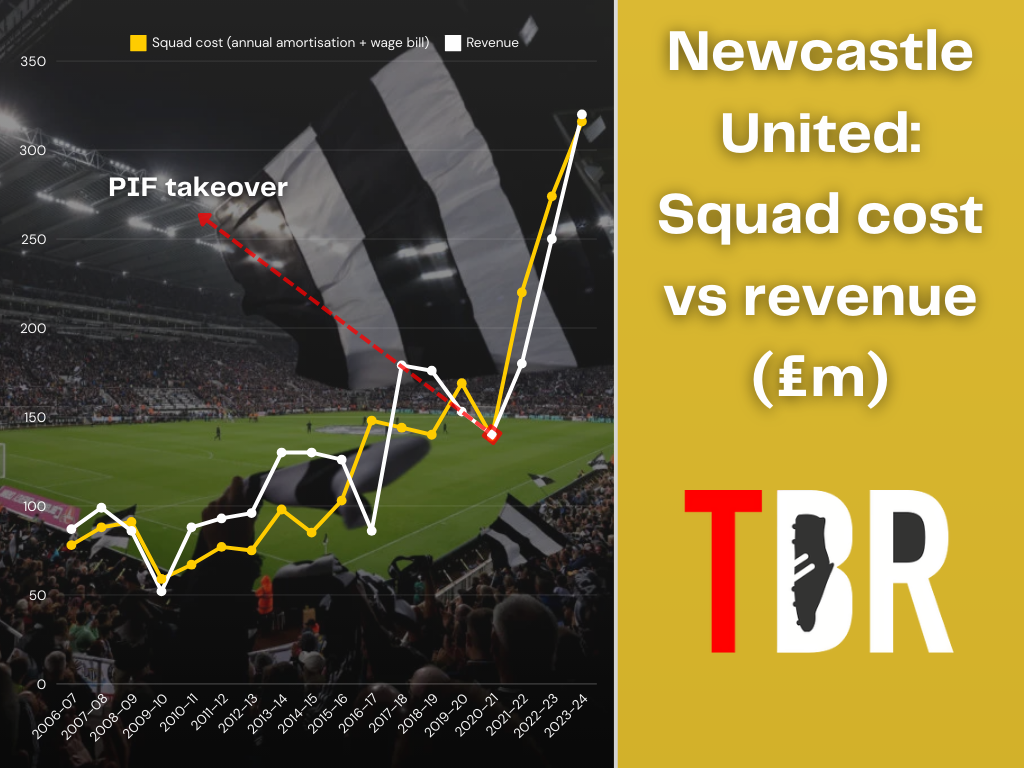
Admittedly, the 2023-24 figures cover a season when Newcastle were in the Champions League and paid the bonuses to players associated with that.
But even so, it is landmark moment.
How will Newcastle’s League Cup triumph help PIF’s PSR situation?
The prize money for winning the League Cup is next to nothing. Newcastle have bank about £100k – the kind of money the Saudi Public Investment Fund don’t bother getting out of bed for.
| Rank | Club | Owner(s) | Net worth |
| 1 | Newcastle United | Saudi Arabia Public Investment Fund (85%), RB Sports & Media (15%) | £750bn |
| 2 | Manchester United | Glazer Family, Sir Jim Ratcliffe | £16.2bn |
| 3 | Arsenal | Stan Kroenke | £13.4bn |
| 4 | Manchester City | Abu Dhabi United Group, Silver Lake | £13.4bn |
| 5 | Chelsea | Clearlake Capital, Todd Boehly, Hansjorg Wyss, Mark Walter | £12.5bn |
| 6 | Liverpool | Fenway Sports Group | £9.7bn |
| 7 | West Ham United | David Sullivan, Daniel Kretinsky, Vanessa Gold | £8.2bn |
| 8 | Aston Villa | Wes Edens, Nassef Sawiris Atairos | £8.2bn |
| 9 | Fulham | Shahid Khan | £6.3bn |
| 10 | Everton | The Friedkin Group | £6.0bn |
| 11 | Tottenham | Joe Lewis Family Trust, Daniel Levy | £4.6bn |
| 12 | Wolverhampton Wanderers | Fosun | £4.6bn |
| 13 | Crystal Palace | Steve Parish, Josh Harris, David Blitzer, John Textor | £4.4bn |
| 14 | Leicester City | The Srivaddhanaprabha Family | £2.8bn |
| 15 | Bournemouth | William Foley | £1.6bn |
| 16 | Brighton & Hove Albion | Tony Bloom | £1.0bn |
| 17 | Southampton | Sport Republic, Katharina Liebherr | £1.0bn |
| 18 | Nottingham Forest | Evangelos Marinakis | £0.5bn |
| 19 | Brentford | Matthew Benham | £0.4bn |
| 20 | Ipswich Town | Gamechanger 20 Ltd. | £0.3bn |
However, there will likely a less easily quantifiably but still significant uplift in terms of commercial income, with sponsors willing to part with more cash to be associated with success and silverware.
The optics of having your brand next to the League Cup trophy, perhaps even with a marketing campaign centred around the historic day at Wembley, will have a material impact in commercial negotiations.
What’s more, PIF could theoretically pump more money into the club via this channel thanks to increased flexibility with the Premier League’s Associated Party Transaction (APT) rules.
Manchester City’s successful challenge to the rules, which govern sponsorship deals with owner-linked companies, will make it slightly easier to strike bigger and better deals with PIF companies anyway.
But with a League Cup in their trophy cabinet, Newcastle will surely have more leverage with the APT test, should PIF wish to go down this route, as they have with Noon and Sela.
Receive weekly football news and updates to your mailbox