
 Arsenal
 Aston Villa
 Chelsea
 Crystal Palace
 Everton
 Fulham
 Leeds United
 Liverpool
 Manchester City
 Manchester United
 Newcastle United
 Nottingham Forest
 Sunderland
 Tottenham Hotspur
 West Ham United
 Wolverhampton Wanderers


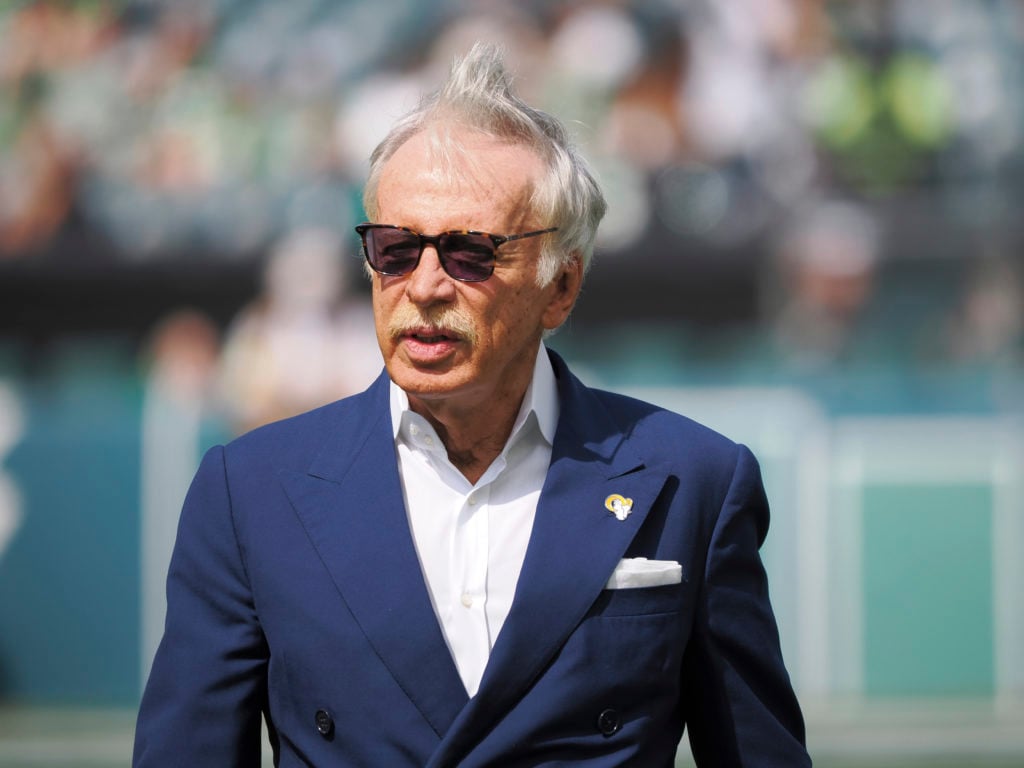
Arsenal owner Stan Kroenke has at times flirted with the multi-club model, but the Gunners’ relationship with KSE-owned Colorado Rapids has never been particularly integrated.
Arsenal met the MLS side in a friendly in 2019 and have traded players a handful of times – Auston Trusty joined the Gunners from the Rapids in 2022, while Rob Holding went the other way three years later.
But in a world where Red Bull and City Football Group have made multi-club ownership the go-to model for elite clubs, Arsenal have, in characteristic Stan Kroenke fashion, been more conservative.
That is despite Mikel Arteta hinting that he’d like to see KSE buy another club to help the North London club with youth development, recruitment pathways and commercial scale.
In the Premier League, 15 clubs operate within a multi-club network of some description.
If you count those clubs with minority shareholders with multi-club interests, only Fulham, Tottenham and Wolves don’t fit the multi-club criteria.
| Club | Shareholder | Other clubs owned |
| Arsenal | Stan Kroenke / Kroenke Sports & Entertainment | Colorado Rapids |
| Aston Villa | V Sports | Vitória S.C. |
| Bournemouth | Black Knight Football & Entertainment | FC Lorient, Auckland FC, Hibernian FC |
| Brighton & Hove Albion | Tony Bloom | Royale Union Saint-Gilloise |
| Brentford | Best Intentions Analytics | Mérida AD |
| Chelsea | BlueCo (Todd Boehly & Clearlake Capital) | RC Strasbourg |
| Crystal Palace | Josh Harris & David Blitzer | FC Augsburg, Real Salt Lake, ADO Den Haag, Waasland-Beveren, Brondby |
| Everton | Friedkin Group | AS Roma, AS Cannes |
| Leeds United | 49ers Enterprises | Rangers |
| Manchester City | City Football Group | New York City FC, Melbourne City, Girona FC, Yokohama F. Marinos, Mumbai City FC, Montevideo City Torque, Lommel SK, Troyes AC, Palermo FC, EC Bahia |
| Manchester United | INEOS (Sir Jim Ratcliffe) | OGC Nice, FC Lausanne-Sport, RC Abidjan |
| Newcastle United | Public Investment Fund (Saudi Arabia) | Al-Nassr, Al-Hilal, Al-Ahli, Al-Ittihad |
| Nottingham Forest | Evangelos Marinakis | Olympiacos, Rio Ave |
| Burnley | ALK Capital | Espanyol |
| West Ham United | Daniel Křetínský | Sparta Prague |
So why are Arsenal so reticent to make use of the Colorado Rapids link?
The MLS is booming. Some ‘franchises’, as they are known on that side of the Atlantic, now boast £1bn valuations. The Lionel Messi effect is in full flow, and the World Cup is in the United States next summer.
However, Kroenke himself doesn’t seem particularly engaged with the MLS club he bought for a song over two decades ago.
- READ MORE: Arsenal set to file official paperwork that hints £500m Emirates Stadium expansion is near
Stan Kroenke sends mixed signals on Colorado Rapids as MLS faces major new challenger
Kroenke’s Rapids, who were MLS champions in 2010, regularly rank rock-bottom in listicles of the worst-run American soccer clubs.
Rapids fans cite a perceived lack of investment in both the playing squad and infrastructure.
Elsewhere in the MLS, owners are pumping in hundreds of millions. Per Forbes latest valuation, the Rapids were the least-valuable franchise across the Eastern and Western Conferences at £362m.
The cynic’s point of view is that because, unlike Arsenal and their Premier League peers, MLS clubs are profitable regardless of sporting performance, Kroenke isn’t motivated to get them to the next level.
But the league as a whole is now at something of an inflection point.
As well as deliberating on whether to change its calendar to align with the European football season, a challenger in the USL Championship is gaining momentum.
The United Soccer League this week secured a major strategic investment from Kewsong Lee’s BellTower Partners.
Lee, who was previously CEO of one of the world’s most prestigious private equity houses in the Carlyle Group, has been named vice chair of the USL as part of the investment.
The partnership has ruffled feathers in the MLS.
It begs the question, if a cold war between the two competing powers in American soccer breaks out, is Kroenke up for the fight?
Could boardroom shakeup pre-empt Arsenal multi-club model?
Arsenal have had a major overhaul at board level, unless you hadn’t noticed.
Tim Lewis has stepped down as executive vice chairman, a position he held for two years. Lewis was on the board for five years, but he has advised Kroenke for over two decades.
In his time at the club, Arsenal have returned to the upper echelons of the Premier League table and the later stages of the Champions League, while commercial and matchday revenue has exploded.

Richard Garlick, formerly managing director, has been made CEO. Perhaps more significantly, KSE stalwarts Kelly Balaha, Otto Maly and David Steiner will also join the board.
Why most significantly? Because more new KSE faces at board level signals that Kroenke wants to integrate Arsenal more into the wider KSE network.
As well as the Rapids, Kroenke owns the NFL’s LA Rams franchise, NBA side Denver Nuggets, the NHL’s Colorado Avalanche, and a host of other smaller teams.
KSE set up a centralised commercial division earlier this year to sell sponsorships on behalf of the group’s various outposts, and this latest development suggests a deeper relationship between the network.
If Kroenke is now seeing the benefits of a global strategy, could a more conventional multi-club structure or a more active link with the Rapids be next?
Receive weekly football news and updates to your mailbox