
 Arsenal
 Aston Villa
 Chelsea
 Crystal Palace
 Everton
 Fulham
 Leeds United
 Liverpool
 Manchester City
 Manchester United
 Newcastle United
 Nottingham Forest
 Sunderland
 Tottenham Hotspur
 West Ham United
 Wolverhampton Wanderers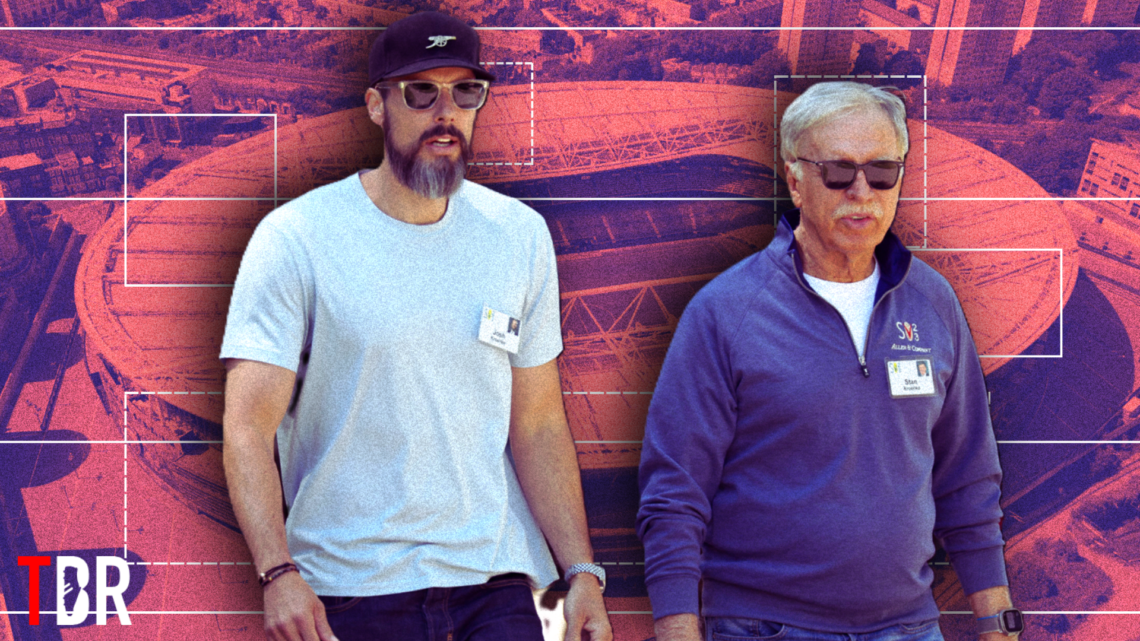


Regardless of what happens on the pitch, Arsenal’s boardroom reshuffle could be the most consequential story of the season in this pocket of North London.
Tim Lewis, who it was announced had left Arsenal late last week, had been with the club for five years. Officially, anyway.
In reality, his relationship with the Gunners and Stan Kroenke, for whom he acted as chief consigliere, goes back much further.
It was Lewis who advised Kroenke in 2007 on buying a stake in the club, as well as throughout the ensuing battle to prise full control away from Alisher Usmanov.
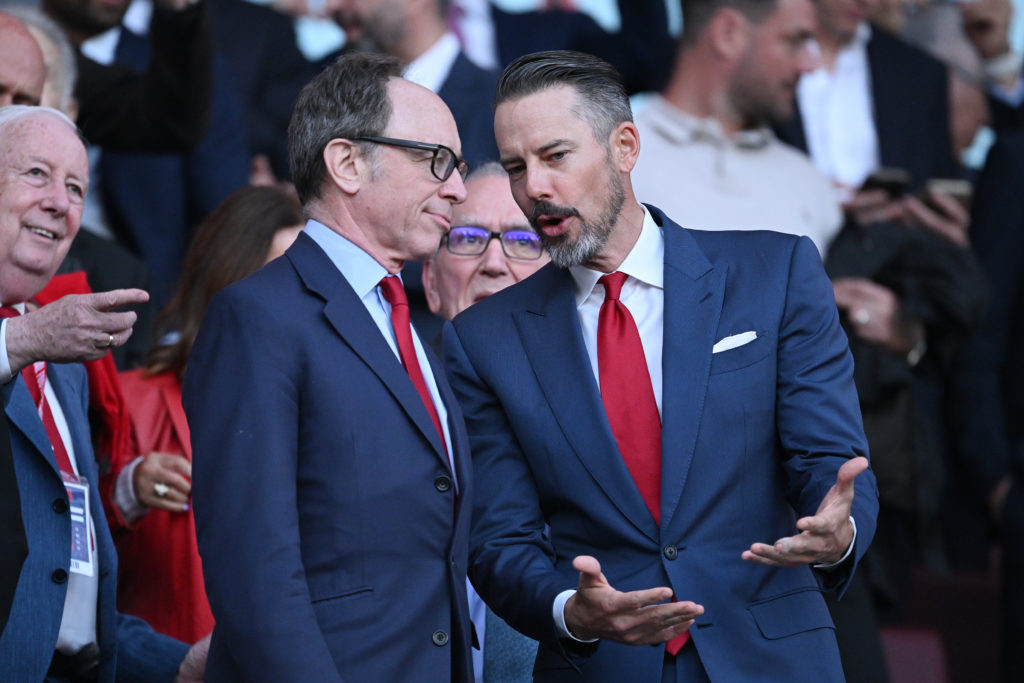
That process concluded in 2018, and the lawyer, 62, took a board role in 2020. For the last two years, he was executive vice chairman, effectively the most powerful man at Arsenal besides the Kroenke family.
He co-authored the last chapter in the club’s history, one which has seen Mikel Arteta get to a position where 2nd place in the Premier League or the Champions League semi-finals simply isn’t good enough.
Correlatively, Arsenal’s revenues have boomed. Once the ugly duckling of the so-called ‘Big Six’, only Liverpool and the two Manchester clubs earned more in the last published financial year, 2023-24.
When the numbers for 2024-25 are released in the spring, Arsenal will likely showcase turnover in the region of £700m. A staggering increase from £372m just three seasons prior.

So, while major silverware eluded him at the Emirates, it’s safe to say his time at the club was a success.
To remove Lewis and start again with a new-look board therefore is a bold move – and a statement of Arsenal’s ambition on and off the pitch in the next phase of Kroenke Sports & Entertainment’s ownership.
And while most of what the new regime does will be behind the scenes, their impact will be felt in the most visible place of all: the Emirates Stadium.
New Arsenal board member Otto Maly could be key to Emirates expansion
It was the summer of 2024 when Josh Kroenke, the heir apparent in N5, revealed that Arsenal’s top brass were exploring the possibility of expanding the Emirates.
It has been 20 years since the stadium opened its turnstiles, not long in the lifetime of a venue which, in today’s money, would likely have cost over £1bn to build.
However, Premier League clubs – and indeed some of their uber-ambitious peers at lower levels in the pyramid are in something of an arms race when it comes to matchday income.

Tottenham fired the starting pistol, with Everton too having now opened an ultra-modern, ultra-commercial stadium of their own.
Liverpool meanwhile have expanded and upgraded over recent years, as have Manchester City. Newcastle, Leeds United and Aston Villa are all poised to do similar. Manchester United, Chelsea and Birmingham City all have lofty ambitions to build huge new stadiums too.
Arsenal have discussed the possibility of increasing capacity to around 80,000, which is expected to cost around £500m given the complexity of the project and the existing site’s tight footprint.

It is significant therefore that one of Arsenal’s new board members, non-executive director Otto Maly, has an extensive background in real estate and major infrastructure projects.
His appointment will be formalised in the coming days with the relevant filings on Companies House.
Maly is the chairman of Maly Commercial Realty and Director of Special Projects at Kroenke Holdings.
He had a significant hand in delivering the SoFi Stadium, home of Kroenke-owned NFL franchise LA Rams. That stadium is widely considered the world’s best, and it is comfortably the most expensive ever built.
| Stadium | Cost (adjusted for inflation) | Location | Opened |
| SoFi Stadium | $5.5 billion | California, USA | 2020 |
| MetLife Stadium | $1.99 billion | New Jersey, USA | 2010 |
| Allegiant Stadium | $1.90 billion | Nevada, USA | 2020 |
| Wembley Stadium | $1.85 billion | London, UK | 2007 |
| Yankee Stadium | $1.79 billion | New York, USA | 2009 |
| AT&T Stadium | $1.79 billion | Texas, USA | 2009 |
| Mercedes-Benz Stadium | $1.56 billion | Atlanta, USA | 2017 |
| Singapore National Stadium | $1.41 billion | Kallang, Singapore | 2014 |
| Tottenham Hotspur Stadium | $1.33 billion | London, England | 2019 |
| Optus Stadium | $1.17 billion | Perth, Australia | 2017 |
Maly is currently aiding the construction of a multi-billion dollar headquarters for the Rams, which will be nestled in a mixed-use commercial and residential district.
That project is emblematic of one of the Kroenkes’ central philosophies: using sports teams as lightning rods in a wider property masterplan.
As Dan Meis, architect of Everton’s Hill Dickinson Stadium, told TBR Football in an interview which he professed to being interested in liaising with Arsenal on their plans: “Almost every project we see now, no matter what the sport or where it is – in the US, Italy, the UK – has become more of a real estate play.”
If and when Arsenal press ahead with the Emirates expansion, it’s likely Maly will be the brains behind the project.
Receive weekly football news and updates to your mailbox