
 Arsenal
 Aston Villa
 Chelsea
 Crystal Palace
 Everton
 Fulham
 Leeds United
 Liverpool
 Manchester City
 Manchester United
 Newcastle United
 Nottingham Forest
 Sunderland
 Tottenham Hotspur
 West Ham United
 Wolverhampton Wanderers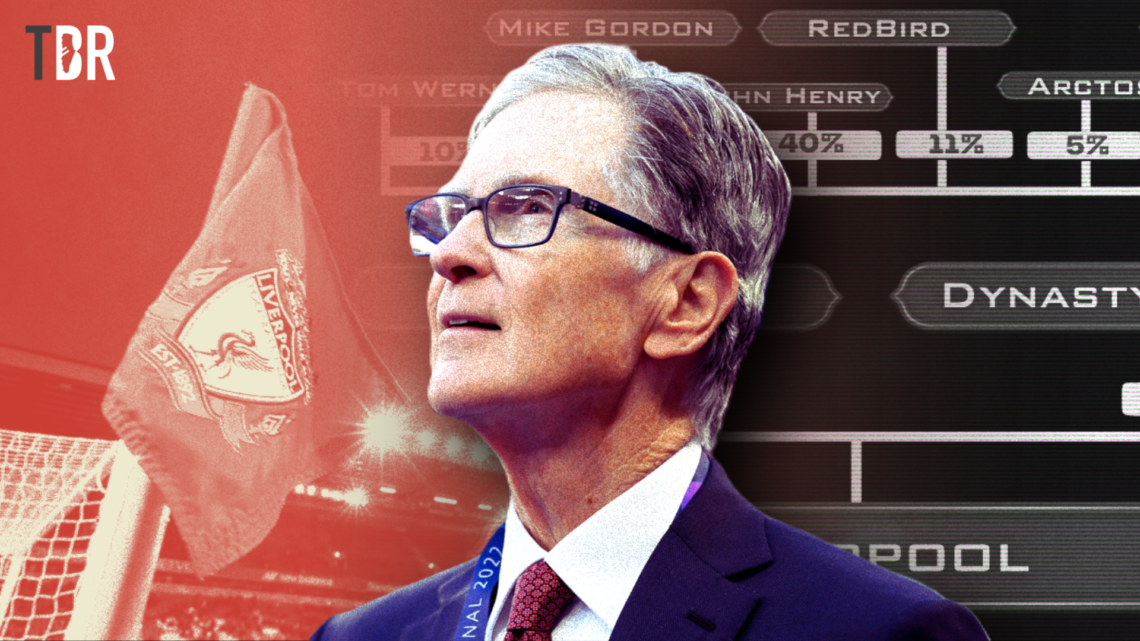


Two of Liverpool’s biggest backers are at odds over a crucial issue that could shape how much profit they eventually pocket from Fenway Sports Group’s ownership of the club.
Arctos and RedBird Capital are among the largest shareholders in FSG, buying into the £12bn-valued sports empire founded by Liverpool principal owner John Henry in 2020 and 2021 respectively.
Both are examples of private equity firms, a kind of investment management company that pools money from institutional investors and high-net worth individuals to buy stakes in businesses.
In football finance, private equity is a relatively new phenomenon. But in the Premier League, PE firms either own, have minority shareholdings in, or a debt deal with 12 clubs in total, including at Anfield.
| Club | PE investor/backer |
| Aston Villa | Atairos |
| Bournemouth | Black Knight Football and Entertainment |
| Burnley | Velocity Sports Partners |
| Chelsea | Clearlake Capital, Ares Management |
| Crystal Palace | Apollo Global Management, Blackstone |
| Everton | Roundhouse Capital |
| Leeds United | 49ers Enterprises |
| Liverpool | RedBird Capital, Arctos, Dynasty Equity |
| Manchester City | Silver Lake |
| Newcastle United | Reuben Brothers |
| Nottingham Forest | Apollo Management |
| Wolves | Fosun Group |
As well as links to Arctos and RedBird, FSG also sold a three per cent stake in Liverpool to another PE firm, Dynasty Equity, for around £127m in 2023.
That deal came about after the Boston-headquartered parent company had listed the club for sale a year earlier, eventually settling on a minority sale after stress-testing their valuation of Liverpool as an asset.
The Dynasty Equity deal implied a valuation of around £4.2bn for the reigning Premier League champions, who begin their 2025-26 Champions League campaign tomorrow evening against Atletico Madrid.
Two years later, the likes of Forbes, KPMG’s Football Benchmark, Sportico and a whole host of other industry experts would argue that the club has further appreciated in worth.
Why does it matter? Because most investors TBR Football speaks to are adamant that FSG’s masterplan on Merseyside is one of capital appreciation: buy low, sell high.
Rather than waiting until the club is consistently and independently profitable in order to draw regular dividends, the intention instead is to eventually flip the asset for a gargantuan profit.
After 15 years at Liverpool, they have already secured a mind-melting return on the £300m or so they invested back in 2010.
At £4.2bn, the club’s value has increased by approximately £31 every time you have drawn breath in that time. Whoever the next investor is, they better have deep pockets.
However, RedBird and Arctos appear to have disparate philosophies when it comes to valuing sports teams, as the latest news illustrates.
- Follow TBR Football’s Head of Football Finance and Governance Content @Adam___Williams on X for all the latest Liverpool business news
Liverpool investors Arctos and RedBird disagree over whether sports valuations are a ‘bubble’
Gerry Cardinale, RedBird Capital’s founder, is something of an iconoclast in sports finance.
For some time now, the investor and multibillionaire has argued that sports team valuations are a ‘bubble’. And bubbles eventually burst when the price of an asset surpasses its inherent worth.
In layman’s terms, Cardinale thinks teams are overvalued.
That is despite his stakes in Liverpool, the Boston Red Sox and Pittsburgh Penguins via FSG, as well as RedBird’s outright ownership of AC Milan and Toulouse in European football.
Conversely, Arctos – which owns stakes in Paris Saint-Germain, Aston Martin Formula One, the NBA’s Utah Jazz and Major League Baseball’s LA Dodgers among others – project a steady increase in valuations.

As relayed by Sportico, a new research paper released by the PE firm suggests that the continuing growth in value of sports teams is not a bubble but rather is due to solid business fundamentals.
“There’s nothing magical going on,” Arctos Managing Director Zach Baran told the sports business publication.
“It [persistent value growth] is perfectly explainable by fundamentals and in the context of the rest of the financial market.”
For Liverpool, the significant factor is whether Arctos and RedBird include them in their analysis.
Unlike teams in America’s franchise leagues, Liverpool are not consistently profitable and do not yield a dividend to John Henry or anyone else in the FSG network.

Instead, their value is wrapped up in their IP and global brand appeal, and the potential to leverage that to drive enormous commercial income.
The naysayers, however, say that soaring revenue is only of worth if Liverpool – and indeed the football ecosystem as a collective – can find a way to stop it flowing straight back out again in player wages, transfer and agents’ fees.
RedBird Capital’s media deal blitz could benefit Liverpool
There is now an extraordinary depth of knowledge in FSG’s network beyond Henry, Tom Werner, Mike Gordon and the rest of the supporting cast.
Fresh off the back of engineering a historic merger between the titanic media brands Skydance and Paramount, RedBird are also looking to buy The Telegraph newspaper and Warner Bros Discovery.

Liverpool meanwhile are consistently bullish about their reach as a brand, citing record-breaking viewership statistics collected by club partners Nielsen last season as case in point.
As the club looks to maximise revenues off the back of the strength of the badge, the contacts and resources at RedBird’s disposal as a new major player in the global entertainment business could be key.
Receive weekly football news and updates to your mailbox