
 Arsenal
 Aston Villa
 Chelsea
 Crystal Palace
 Everton
 Fulham
 Leeds United
 Liverpool
 Manchester City
 Manchester United
 Newcastle United
 Nottingham Forest
 Sunderland
 Tottenham Hotspur
 West Ham United
 Wolverhampton Wanderers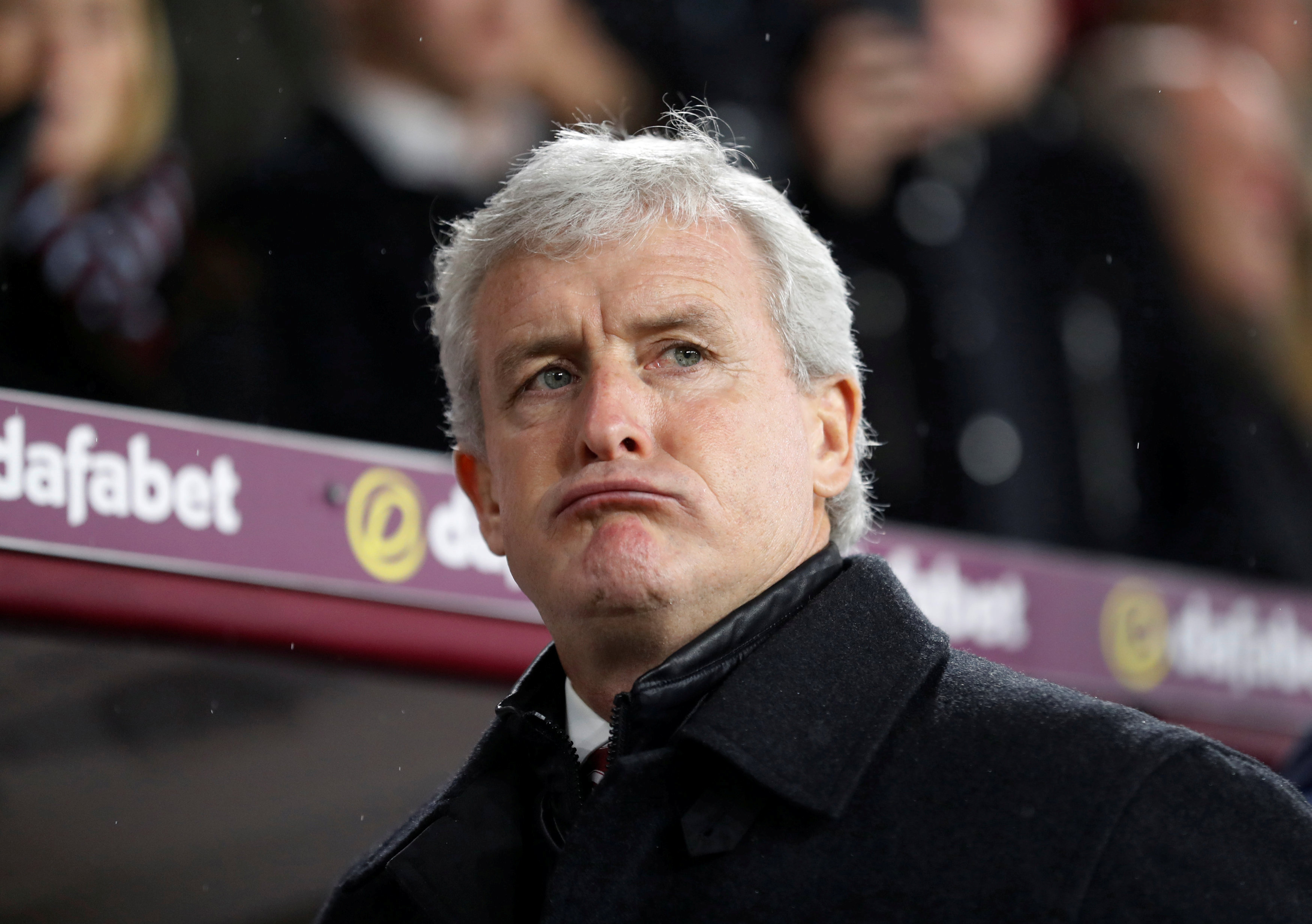


Mark Hughes became the latest high-profile managerial casualty of the season when he was sacked by Stoke City just hours after the club had been knocked out of the FA Cup by League Two side Coventry City.
The result marked a new low point in what has been an increasingly turbulent, disappointing and concerning season for supporters and with The Potters having slipped into the relegation zone less than seven days earlier it was no surprise to see the club hierarchy dismiss their Welsh manager.
Hughes had been one of the longest serving managers in the Premier League prior to his dismissal and although his time in The Potteries ended on a sour note the 54-year-old should look back on his four-and-a-half years at the club with some pride.
He led Stoke to three consecutive top-ten finishes in the top flight for the first time in almost a century and helped to reinvent the team’s playing style, switching to a more possession-based philosophy after the direct football employed by his predecessor Tony Pulis.
However, the last eighteen months have seen a gradual decline in performances and results eventually culminating in Hughes being relieved of his duties. Here, The Boot Room looks at three reasons why Stoke decided to part company with ‘Sparky’.

Poor performances and results
Football managers are ultimately judged on the results and performances that they can inspire out on the pitch and in the last eighteen months they quite simply have not been good enough under Mark Hughes.
The Potters currently sit eighteenth in the Premier League table and have been sliding towards the relegation zone since mid-November.
In addition to this, the team were knocked out of both domestic cup competitions at the first time of asking after being defeated by Bristol City in the League Cup and by League Two side Coventry City in the FA Cup on Saturday.
Ultimately this has led to supporters having little to look forward to for the remainder of the season barring a relegation battle.
However, it was the manner of the performances, rather than the results themselves, that ultimately led to Hughes’ demise. Stoke have the worst defensive record of any team in any of Europe’s top-flight divisions and have been conceding over two goals per game on average so far this campaign.
The team have been on the receiving end of a number of hammerings, including against Manchester City (7-2), Tottenham Hotspur (5-1) and Chelsea (4-0 and 5-0), which has been further exacerbated by defeats to clubs in the bottom half of the table, exemplified by home losses against Bournemouth (2-1), Newcastle United (1-0) and West Ham United (3-0).
Results and performances were not acceptable for a team that has now spent a decade in the top flight and there has been little in recent weeks to suggest that Hughes was capable of turning Stoke’s fortunes around.

A loss of identity
Two years after his appointment Mark Hughes had built a Stoke City team that had a clear identity.
The Welshman had implemented a new style of play that promoted possession-based football and dynamic attacking play, far removed from the direct approach adopted by his predecessor Tony Pulis, with players such as Xherdan Shaqiri, Marko Arnautovic and Bojan Krkic providing the flare and creativity.
The Potters ripped apart Manchester City and Manchester United during December 2015 with the team being referred to by the media as ‘Stoke-alona’ as Hughes’ vision for the club began to take shape.
However, defeat in the League Cup semi-final against Liverpool in early 2016 appeared to signal the decline in Stoke’s fortunes. Results and performances began to deteriorate and the possession-based football slowly began to be eroded and replaced by a reliance on long balls and crosses towards Peter Crouch. Arnautovic and Bojan both departed the club and soon the team had lost all sense of identity, stumbling along from week-to-week.
Hughes clearly did not know what his best team was and this was reflected in the constant switching of personnel and formation. His decision to switch to a 3-4-3 formation at the start of the season, despite having no adequate wing-backs in the squad, was incredibly naïve on reflection and supporters were left scratching their heads watching striker Mame Biram Diouf effectively being shoe-horned in as a right-back.
In the final months of his reign Hughes had reverted to a 4-5-1 system with the team aimlessly lumping direct balls in the direction of an isolated Peter Crouch. The ‘Stoke-a-lona’ identity was long gone.

Errors in the transfer market
The gradual decline in Stoke City’s fortunes on the pitch has occurred in parallel with an increasing number of failures and mistakes in the transfer market. Whilst Mark Hughes should be credited for bringing the likes of Bojan Kirkic and Marko Arnautovic to The Potteries for minimal fees in his debut season his more recent signings have been catastrophic.
Club record signing Giannelli Imbula was signed for in excess of £18 million in January 2016 but, despite a bright start to his Stoke career, he quickly found himself frozen out of the first team squad altogether and is currently on loan a Toulouse.
Likewise, Saido Berahino was purchased for £12 million from Midlands rivals West Bromwich Albion in order to solve the club’s goal scoring dilemma but instead the striker has failed to hold down a regular first team spot and has yet to find the net in his first year with the club.
In short, Hughes has wasted significant amounts of money in recent transfer windows on players that have made absolutely no impact at the club. These failing have been further exacerbated by the 54-year-old’s failure to address some of the key issues that have undermined Stoke’s performances this season, with his refusal to purchase natural wing-backs in the summer, despite using a 3-4-3 formation, an especially bizarre error of judgement.
Receive weekly football news and updates to your mailbox