
 Arsenal
 Aston Villa
 Chelsea
 Crystal Palace
 Everton
 Fulham
 Leeds United
 Liverpool
 Manchester City
 Manchester United
 Newcastle United
 Nottingham Forest
 Sunderland
 Tottenham Hotspur
 West Ham United
 Wolverhampton Wanderers


When Liverpool and Crystal Palace face each other in English football’s traditional curtain-raiser in the Community Shield on Sunday, finance and governance will be front and centre in the directors’ box.
For Steve Parish, chairman and co-owner of Crystal Palace, the Court of Arbitration’s ruling on whether or not to overrule UEFA’s decision to bar them from the Europa League will be the issue of the day.
For John Henry, or more likely whoever is despatched to Wembley Stadium on behalf of FSG, discussions are more likely to centre on the transfer market, which Liverpool are dominating this summer.

But the two ownership regimes have an equal say at Premier League shareholders meetings, where related-party sponsorship deals, Profit and Sustainability Rules (PSR), and how to accommodate football’s swelling matchday calendar are often the main agenda topics.
Under the Premier League’s constitution, each club gets one vote, with a two-thirds majority required to pass new motions, such as changes to the division’s financial rules or commercial arrangements. That is despite the cavernous gap in revenue between the Premier League’s minnows and its big beasts.
Liverpool, obviously, fall into the latter category. They claim to have over 1 billion followers worldwide and position themselves as a global brand.

Palace, meanwhile, are a team on the up and, with aspirations to expand Selhurst Park and realise their commercial potential, certainly aren’t bottom-feeders. Financially, however, the two clubs exist in different universes.
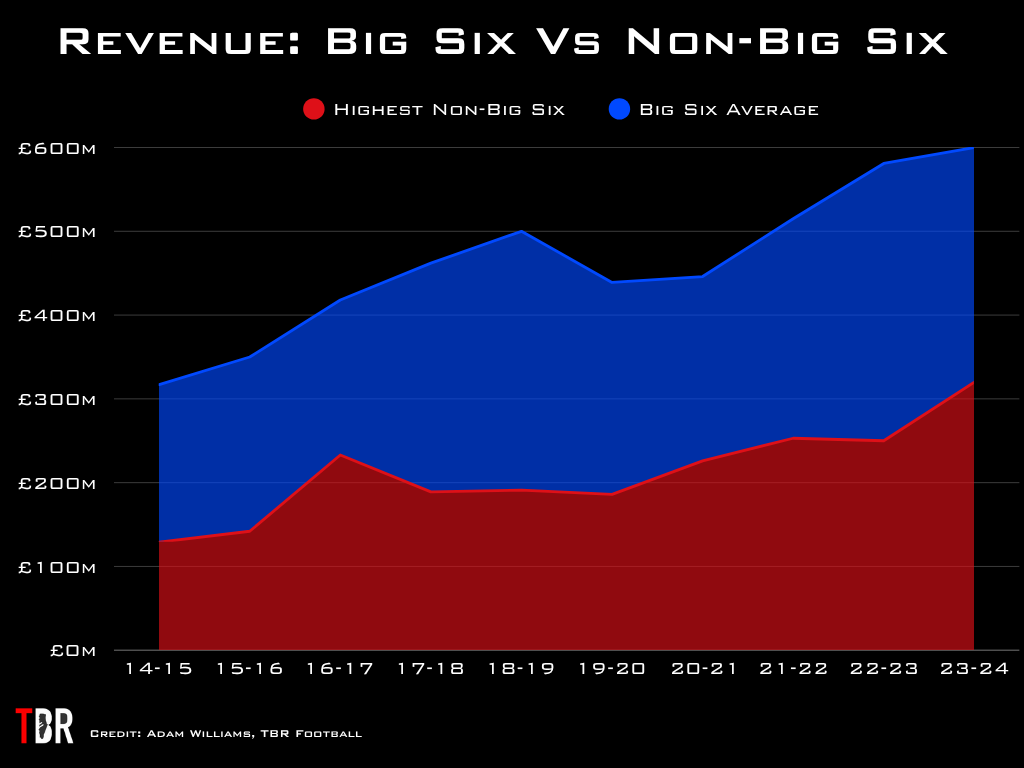
And the 2025 Community Shield will be emblematic of the growing divide between the so-called ‘Big Six’ and everyone else.
£519m revenue gulf between Liverpool and Crystal Palace
The headline figures speak for themselves.
We don’t yet have Liverpool’s official revenue figures for 2024-25 but football finance expert Greg Cordell forecasts that the Reds will have earned £719m on their way to winning the second Premier League title of the FSG era.
Palace, meanwhile, whose FA Cup triumph was historic but not particularly lucrative, will have earned around £200m, up slightly from £190m the previous season.
That’s a gulf of £519m in turnover between the two teams, which represents the biggest ever gap between Community Shield finalists in history, the next closest being when Leicester City came up against Manchester United in 2016.
In the preceding financial year, Leicester earned £129m, while United trousered £515m.
Remember, Leicester’s Premier League title win in 2015-16 was rightly characterised as perhaps the biggest upset in sporting history. And yet, the gap between last season’s FA Cup and Premier League winners is even greater.
How Liverpool’s finances compare to Crystal Palace’s – wages, commercial income, amortisation
In 2023-24, the last financial year for which a full financial data set is available for both teams, Liverpool spent £386m on wages and salaries.
The bulk of that figure – probably 75-80 per cent – went to players and senior first-team staff. Still, Liverpool have no PSR issues because they have been consistently profitable at the PSR level for years.
By comparison, Palace spent a club-record £134m on wages. That was up by around £3m on the previous season, but Parish and the rest of the Palace ownership regime have generally been very restrained as far as payroll is concerned.
| Rank | Club | Wages (23-24) |
| 1 | Manchester City | £413m |
| 2 | Liverpool | £386m |
| 3 | Manchester United | £365m |
| 4 | Chelsea | £338m |
| 5 | Arsenal | £328m |
| 6 | Aston Villa | £252m |
| 7 | Tottenham Hotspur | £222m |
| 8 | Newcastle United | £219m |
| 9 | Nottingham Forest | £166m |
| 10 | West Ham | £161m |
| 11 | Everton | £157m |
| 12 | Fulham | £155m |
| 13 | Brighton | £146m |
| 14 | Wolves | £142m |
| 15 | Bournemouth | £136m |
| 16 | Crystal Palace | £134m |
| 17 | Brentford | £114m |
| 18 | Burnley | £93m |
| 19 | Sheffield United | £64m |
| 20 | Luton Town | £57m |
Meanwhile, there was a smaller gap in player amortisation, which is how clubs account for transfer fees over a set period of up to five seasons. Liverpool’s annual total was £115m, while Palace’s was £46m.
Primarily, Premier League clubs – including the two set to meet at Wembley – rely on three main revenue streams: matchday, media and commercial.
Commercially, Liverpool are flying. They generated £308m from sponsorship, retail and events across the financial year, which represents a nearly 400 per cent increase in the 15 years FSG have owned the club.
At an expanded Anfield, Liverpool will expect to earn north of £100m through the turnstiles every season. In 2023-24, that figure was £102m. In 2024-25, expect closer to £110m.
Broadcast income is centrally negotiated, but Liverpool have lobbied hard for the expansion of the Champions League, which has greatly increased the amount they can hope to earn in this category. Their latest media total was £204m, around £60m lower than their club-record figure.
Palace’s commercial income was £31m, and there is scope to go much further. The club is routinely cited as one with one of the highest ceilings as far as the non-Big Six clubs are concerned.
Matchday income is an area they are actively looking to improve, with gate receipts of just less than £14m in 2023-24. That will improve with at least four more matches at Selhurst Park in 2025-26, regardless of which European competition they are in. Still, the need to expand the stadium is pressing.
With broadcast income, the South London club earned £146m in the last financial year. Again, European income will improve that figure.
Receive weekly football news and updates to your mailbox