
 Arsenal
 Aston Villa
 Chelsea
 Crystal Palace
 Everton
 Fulham
 Leeds United
 Liverpool
 Manchester City
 Manchester United
 Newcastle United
 Nottingham Forest
 Sunderland
 Tottenham Hotspur
 West Ham United
 Wolverhampton Wanderers


Aston Villa have been one of a handful of clubs to challenge the Premier League orthodoxy in recent years, but Premier League spending rules are keeping their ambitions in check.
Villa are now eight without a win in all competitions and Unai Emery might be grateful that Man City’s capitulation has taken the spotlight off them to an extent.
- UEFA Champions League
-
Aston VillaAston Villa

0|0
 JuventusJuventus
-
- UEFA Champions League
-
Club Brugge KVClub Brugge KV

1|0
Aston VillaAston Villa
-
- League Cup


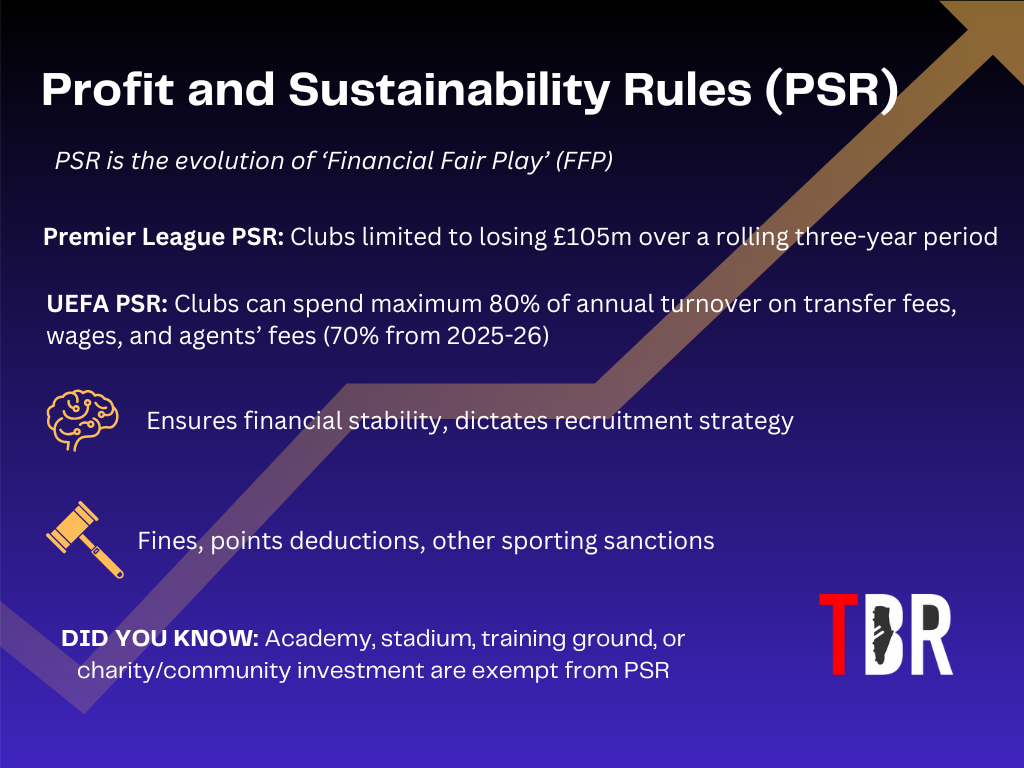
Villa were forced by PSR (Profit and Sustainability Rules) to taper their spending in the summer, ending the window with a relatively modest net spend of around negative £25m.
The departure of Douglas Luiz to Juventus has arguably hit Villa hardest this season.
But had the Brazilian’s exit not been actively sought by the club’s owners – Wes Edens, Nassef Sawiris, and Atairos – then Villa would have almost certainly breached PSR for the three-year period to 30th June 2024.
In the end, it required some accountancy sleights of hand for Villa to get within the £105m allowable loss threshold anyway.
It was by no means a situation unique to them, but the B6 club sold Tim Iroegbunam to Everton for around £10m with Lews Dobin going in the other direction for a roughly equivalent fee.
As fees paid are amortised over five years while fees received hit the balance sheet immediately, this quasi-swap deal gave Villa a short-term boost that allowed the comply with PSR.
The fact that they and half a dozen other clubs were forced to go down this route was, to many analysts and commentators, evidence that PSR is simply not fit for purpose.
However, the owners are not turning off the taps in terms of funding – not by a long shot.

Edens, Sawiris and Atairos have sanctioned close to £100m of investment into the club via share issues in recent months.
And a new loan from Goldman Sachs secured against Villa’s property assets shows that the club have received fresh capital again in the last seven days – but what for?
To gauge what the loan might mean for the club, TBR Football spoke to Liverpool University football finance lecturer, Price of Football author, and industry insider Kieran Maguire.
- READ MORE: What Aston Villa have just done could cause rift between NSWE and Atairos as £3bn at stake
New Goldman Sachs loan leaves an exit option at Aston Villa for Edens, Sawiris and Atairos
Villa are planning a major redevelopment of Villa Park and it had been suggested that, as the loan’s securities indicate that it was for a large sum, the extra capital could go towards this project.
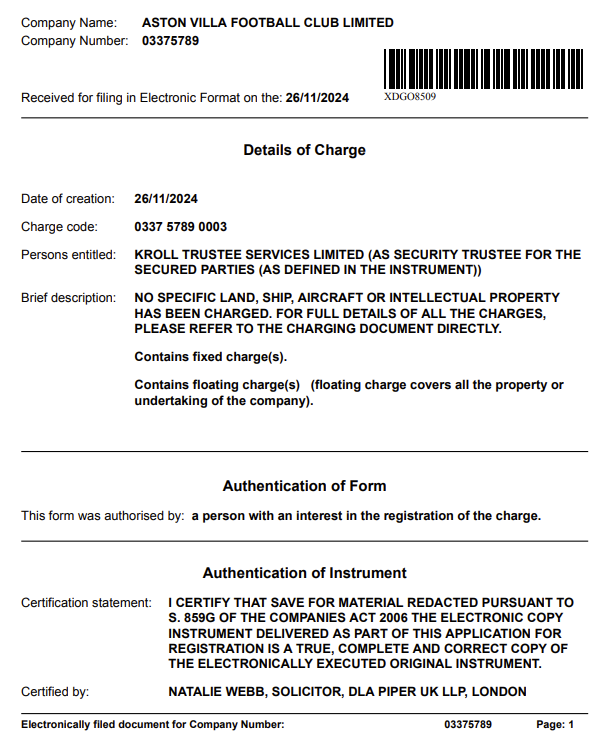
However, Maguire forecasts that the facility is more likely to cover day-to-day costs, such as wages and transfer instalments, at a time of year when cash flow is typically low.
“We don’t know the amount of the loan yet,” he said.
A”lso, it is fairly standard banking practice to secure the loan against all property assets because it more comprehensively covers you.
“With Atairos, Edens and Sawiris all having their established stakes, borrowing makes sense because injecting further equity makes it more complicated.

“My personal view that on an operational basis, Villa are consuming money rather than generating.
“They also have significant outstanding transfer fees that need paying. The money has to come from somewhere.
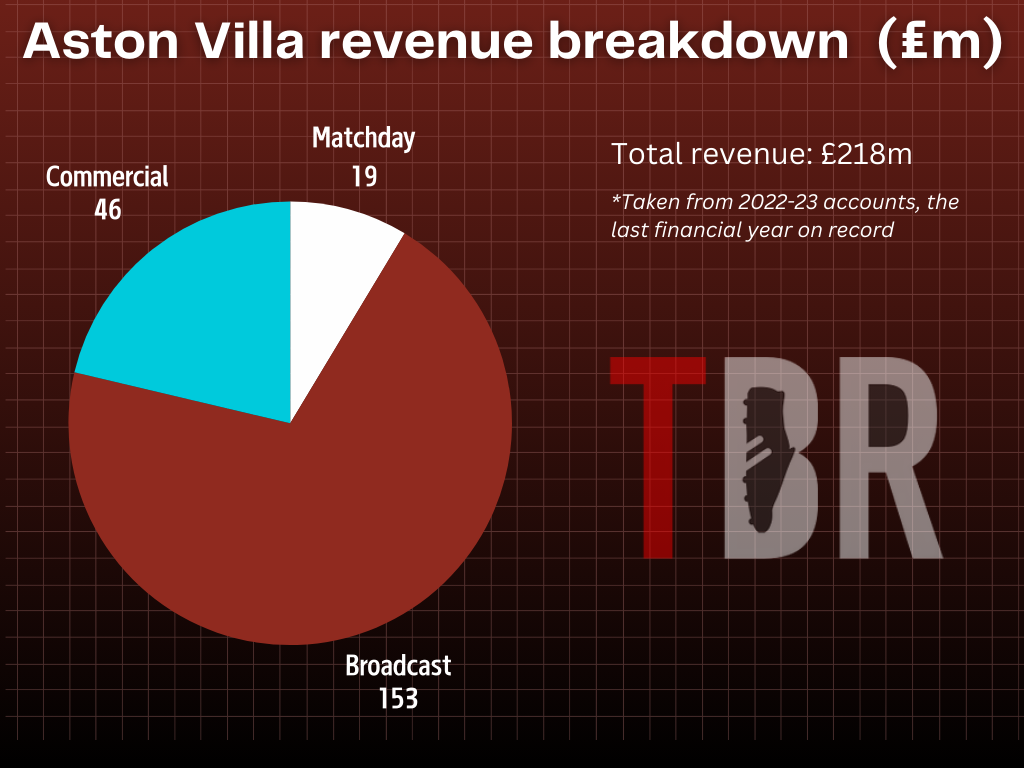
“It is not coming from ticket sales as Villa make less than £1m per match. Their wages were 89 per cent of revenue last season. That means they are running at a very significant loss.
But why this option as opposed to injecting more equity into the club or loaning the club money from their own purse?
According to Maguire, because avoids issues with altering the club’s corporate structure and is less committal from the owners’ perspective.
“You could put money into the club in the form of non-voting shares, but why? You don’t get the control or the emergency button of knowing you will one day get the money back.”
PSR and Unai Emery’s transfer budget: Can Aston Villa spend this January?
Compliance this season will be even more challenging. And yes, that is with Champions League income taken into account.
Why? Because the small profit that Villa made in 2021-22 is now no longer part of their PSR calculation.

Currently, the only relevant financial year for their calculation whose results are in the public domain is 2022-23, when they lost a mammoth £120m.
For PSR purposes, the final figure will be lower when PSR-deductible costs are factored in.
However, with the likes of Swiss Ramble projecting that Villa have lost in the region of £60m for 2023-24, the margins are oncer again razor thin for Villa.
They will release their accounts for last season at some point in the first quarter of 2025.

It seems unlikely therefore that Emery will be given significant funds to spend in January unless they are offset against sales.
There could be some movement in the transfer market, but Villa fans probably shouldn’t expect any blockbuster signings.
Receive weekly football news and updates to your mailbox