
 Arsenal
 Aston Villa
 Chelsea
 Crystal Palace
 Everton
 Fulham
 Leeds United
 Liverpool
 Manchester City
 Manchester United
 Newcastle United
 Nottingham Forest
 Sunderland
 Tottenham Hotspur
 West Ham United
 Wolverhampton Wanderers


Aston Villa are facing yet more change, as the president of football operations has changed hands during a crucial time in the club’s history.
The Villans have enjoyed a rise ever since they were promoted back into the Premier League, with plenty of memorable moments to go with it.
Unai Emery has been at the forefront of most of that, especially the more positive moments, such as a deep run into last season’s Champions League.
However, the mood around Aston Villa has soured somewhat over the summer, leaking into the new season.
A poor start on the pitch may well be reflected by changes that have occurred off it.
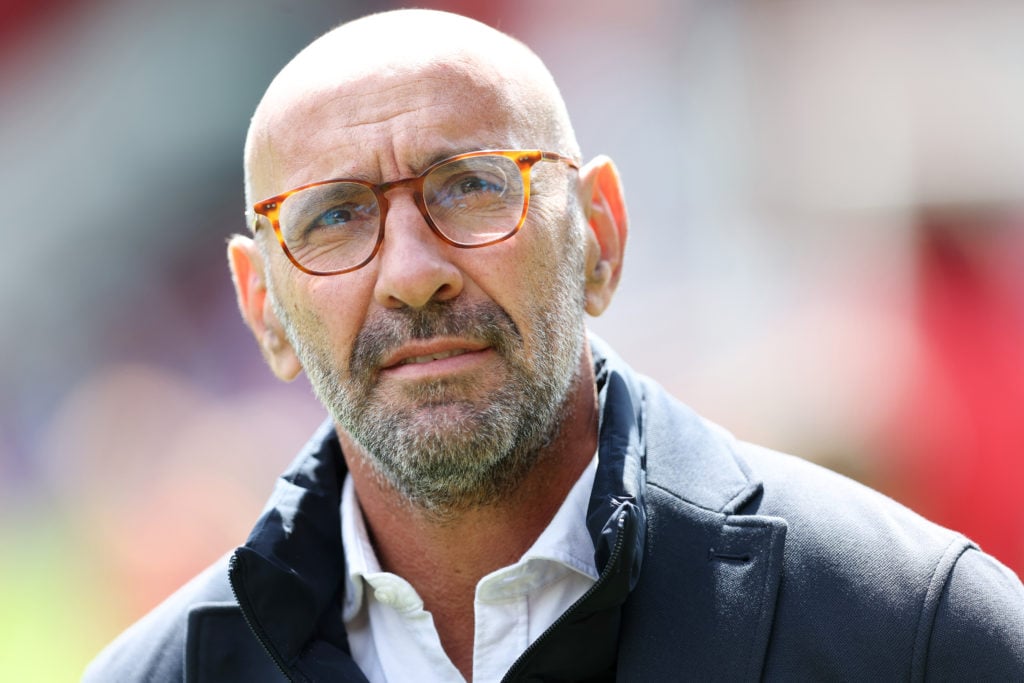
Monchi has left Aston Villa after just over two years as the president of football operations.
In his stead is Roberto Olabe, who joins the club after a successful spell at Real Sociedad.
There are many questions surrounding how Villa reached this point, as early reflections are made on Monchi’s era.
However, one thing that is clear is the impact of PSR on the club.

Finance expert explains Aston Villa’s wage bill concerns under Monchi
As the dust settles on the hierarchical changes at Aston Villa, plenty of judgment will be cast over the past two years with Monchi in charge.
One thing that is clear, however, is the change that occurred during his spell.
While Aston Villa were competitive on the pitch, they ended up being constrained off it with PSR and FFP concerns.
With Monchi now leaving, his legacy could be that of an inflated wage bill, which could have paved the way for his exit.
TBR Football’s finance expert, Adam Williams, explained the situation as he said: “I don’t know how across the finances of every signing Monchi was, but he oversaw a dizzying increase in the wage bill at Villa.
“They have spent much, much less on a net basis on transfers than a lot of their peers. However, their wage bill is one of the biggest in the Premier League – and the wage bill is usually a far more accurate yardstick for success on the pitch than transfer spending.
“In 2023-24, Villa became the first club in years to surpass one of the so-called ‘Big Six’ in terms of their payroll. They spent £252 million on wages, which was more than Spurs. And I expect that gap will have widened last season, although we won’t know for sure until the accounts are released in the spring.
“Also, you have to consider that not all of that £252 million is player and first-team staff wages. Tottenham are a bigger club commercially and therefore pay much more to behind-the-scenes staff – executives, the administration team and so on.
“So if you looked at the playing budgets alone, Villa would have an even bigger lead over Spurs proportionately. And the gap between themselves and the rest of the Big Six would shrink by the same logic.”
There is a correlation between season standings and wages, but it may have made it tougher to manoeuvre in the market, where it proved tough to operate over the summer.
“Paying huge wages was clearly an explicit strategy from Monchi,” Williams said. “He has gambled on players with small upfront costs and big wages. Player trading is all about return on investment, and there are a lot of cases where his recruits have failed to make a significant enough impact on the pitch.

“Then again, look where they have been in the last few seasons. They hadn’t been in the Champions League since the 1980s. They opted against the slow-burn approach and decided to try and get there by brute force, and it worked. It was always going to be hard to sustain it.”
“Under Premier League PSR, they are fine thanks to the sale of the women’s team to themselves. UEFA’s financial settlement is much harder to deal with and requires a more measured approach to player trading. Maybe Monchi wasn’t the man to deliver that.”
Now, the responsibility falls to Roberto Olabe, who will have a big task on his hands to help turn things around for Aston Villa.
- READ MORE: Aston Villa fans stunned after hearing who Monchi wanted to sign as Emiliano Martinez’s replacement

Unai Emery faces short-term pain in turning Aston Villa’s season around
While the summer transfer window didn’t quite go to plan, the market is now closed and Aston Villa have their current squad until January.
For Unai Emery, it’s far from ideal, but it’s now on him to look at internal solutions to deal with the current performance issues his team has.
| Position | Team | Played MP | Won W | Drawn D | Lost L | For GF | Against GA | Diff GD | Points Pts |
| 15 |  Nottingham ForestNottingham Forest Nottingham ForestNottingham Forest | 5 | 1 | 2 | 2 | 5 | 9 | -4 | 5 |
| 16 |  BurnleyBurnley BurnleyBurnley | 5 | 1 | 1 | 3 | 5 | 8 | -3 | 4 |
| 17 |  BrentfordBrentford BrentfordBrentford | 5 | 1 | 1 | 3 | 6 | 10 | -4 | 4 |
| 18 |  Aston VillaAston Villa Aston VillaAston Villa | 5 | 0 | 3 | 2 | 1 | 5 | -4 | 3 |
| 19 |  West HamWest Ham West HamWest Ham | 5 | 1 | 0 | 4 | 5 | 13 | -8 | 3 |
| 20 |  WolvesWolves WolvesWolves | 5 | 0 | 0 | 5 | 3 | 12 | -9 | 0 |
There will be some reliance on the new signings to hit the ground running, such as Harvey Elliott and Evann Guessand.
Beyond that, it’ll then be down to him and Olabe to create a long-term strategy that will keep the team evolving.
It remains to be seen if Villa can do that, but there are some big weeks ahead for the direction of the club.
Receive weekly football news and updates to your mailbox