
 Arsenal
 Aston Villa
 Chelsea
 Crystal Palace
 Everton
 Fulham
 Leeds United
 Liverpool
 Manchester City
 Manchester United
 Newcastle United
 Nottingham Forest
 Sunderland
 Tottenham Hotspur
 West Ham United
 Wolverhampton Wanderers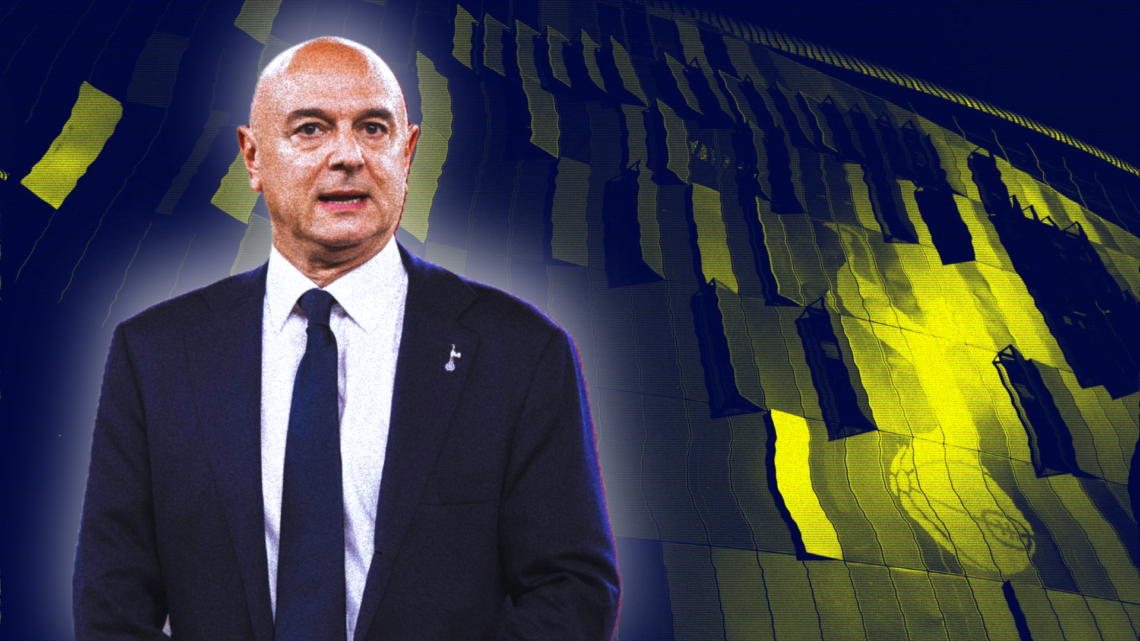


Tottenham are for sale. Nothing new there. Daniel Levy revealed over a year ago that Spurs are seeking fresh investment. And within the industry, it has been known that ENIC are open to a sale for years.
There have been umpteen false dawns in this department. MSP Sports Capital were in talks to acquire a 40 per cent stake in the club last summer, but nothing materialised. Several other private equity firms have also been linked with Tottenham.
More recently, it was reported that Spurs were close to striking an investment agreement and stadium naming rights deal with an unspecified company from Saudi Arabia. There has been little movement on that front, however, and sources consulted by TBR Football suggest that those stories may have been premature.
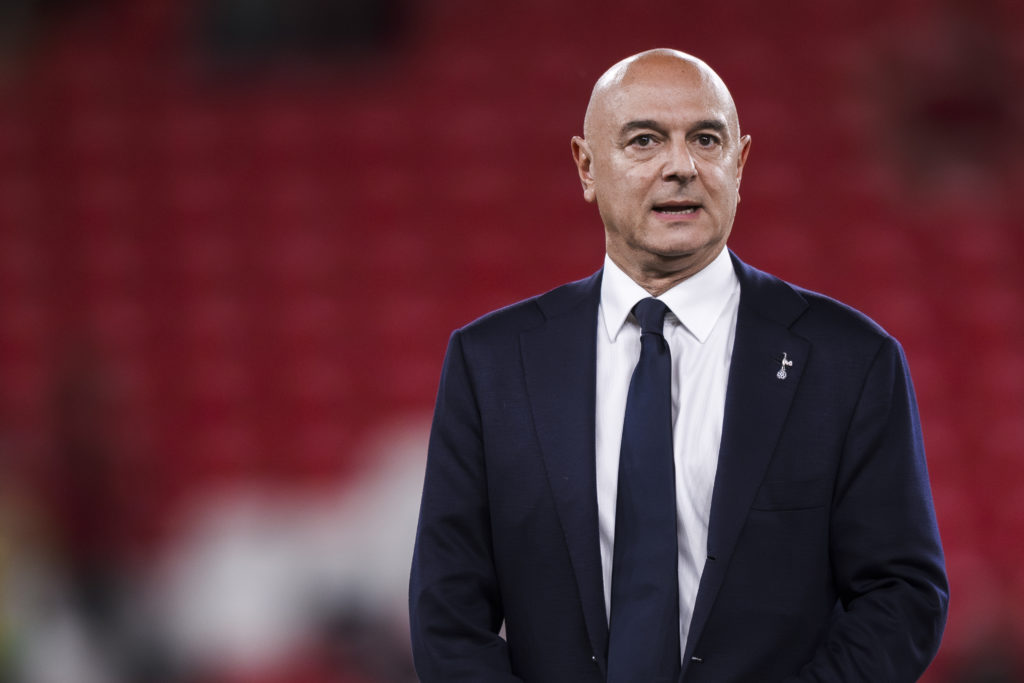
Perhaps the most evocative prospect – for the Spurs fans who, above all else, want their club to spend more in the transfer market and on player wages – is a state-backed bid.
Spurs have been regularly linked with Qatar by reliable sources in recent times. Daniel Levy has met privately with Paris Saint-Germain and Qatar Sports Investments bigwig Nasser Al-Khelaifi on a number of occasions, purportedly to discuss the potential of a part-takeover of Tottenham.
Unlike private sector investment, sovereign wealth funds do not necessarily expect a return on their investment. Or, at least, not a traditional financial return.
At Manchester City, PSG and Newcastle United, Gulf states have instead sought to project their power and get a foothold in Western sporting culture as they diversify their economies away from oil.
Nation state ownership is enormously controversial, however, and not least within the boardrooms at Premier League clubs, where there are anxieties about artificially inflated commercial deals, transfer and wage inflation, and disproportionate institutional influence among state-owned clubs.

Historically, Levy has expressed reservations about this kind of model in football finance.
“The landscape of the Premier League has changed significantly,” the Spurs chairman and co-owner said back in 2023
“It is understandable that some fans call for more spending, much of which is unsustainable for many clubs.
“We are competing in a league in which we have seen increased sovereign wealth ownership and consortia finance; and in a league where the spending power is now vested in the hands of a few who dominate and have the ability to distort the market.”
However, the 62-year-old former investment banker appears to have, if not changed his mind, then at least softened his stance.
Daniel Levy not against state ownership ‘in principle’
The state of football finance and governance was the main topic of conversation in Levy’s conversation with Gary Neville for The Overlap this week.
The issue of state ownership was raised by Levy himself when asked what he would do if he was in the shoes of the soon-to-be-introduced independent regulator for English football.
Levy raised concerns about the potential for state-run clubs to strike inflated sponsorship deals, but he simultaneously said he has no issue with state ownership “in principle”.
“Levy knows that it’s sensible to shake the hand that feeds you,” says University of Liverpool football finance lecturer Kieran Maguire, speaking exclusively to TBR Football about Levy’s stance.
“If that hand could be from a sovereign wealth fund, he is showing his business acumen in not ruling out that as a possibility.
“There is no point in closing that door if, as we have been routinely told in various reports, a deal with a Qatari group or some other wealth fund is a possibility.

“It would likely be some kind of control deal with a state-organised fund. The question is, how much control is Levy himself willing to give up?
“Ideally, he would like to remain in as much control as possible. So he has got to find someone who is willing to acquiesce and who doesn’t see him as a rival in the ownership but rather as a colleague.”
Premier League CEO says league won’t be cut to 18 teams
Previously, Maguire has told TBR Football that Levy would love to see the size of the Premier League reduced, ideally to 16 or 18 teams.
Levy has said in the past that he feels there are too many matches in the calendar and that there should be a re-focus on fewer but more high-quality matches.
The theory? That fewer matches would reduce the need for a large squad, minimising the wage bill, which is always a football club’s biggest expense. Spurs, for all the talk that they are modest wage spenders, have still paid players and staff almost £1.5bn since the move into the Tottenham Hotspur Stadium.
However, Premier League CEO Richard Masters has now explicitly rejected the idea of removing two teams from the division.

“I don’t think we should be forced into that decision,” he told BBC Sport.
“I am all for the growth of the game and the exciting competitions our clubs can participate in – but not at the expense of domestic football.
“Since 1994 the Premier League has been 380 matches, 20 clubs. We haven’t changed shape at all. Now we are now starting to redesign our domestic calendar at the altar of European and global expansion.
“We are asking the players to play in more matches. There has to be, at the top of the game, a proper dialogue between Fifa and all the stakeholders about how these things go forward. That has been sadly missing.”
Receive weekly football news and updates to your mailbox