
 Arsenal
 Aston Villa
 Chelsea
 Crystal Palace
 Everton
 Fulham
 Leeds United
 Liverpool
 Manchester City
 Manchester United
 Newcastle United
 Nottingham Forest
 Sunderland
 Tottenham Hotspur
 West Ham United
 Wolverhampton Wanderers


Arsenal owner Stan Kroenke is one of the most prolific sports investors out there. But in North London, he won’t get a financial return for a very long time.
Besides very modest emoluments in the form of directors’ pay or management fees, no one involved with Kroenke Sports & Entertainment has yet made any meaningful money from Arsenal.
Since first investing in the club in 2007, Stan Kroenke has plunged over £1.1bn into the club, spending somewhere in the region of £800m to take 100 per cent control of the club and providing another £324m in loans.
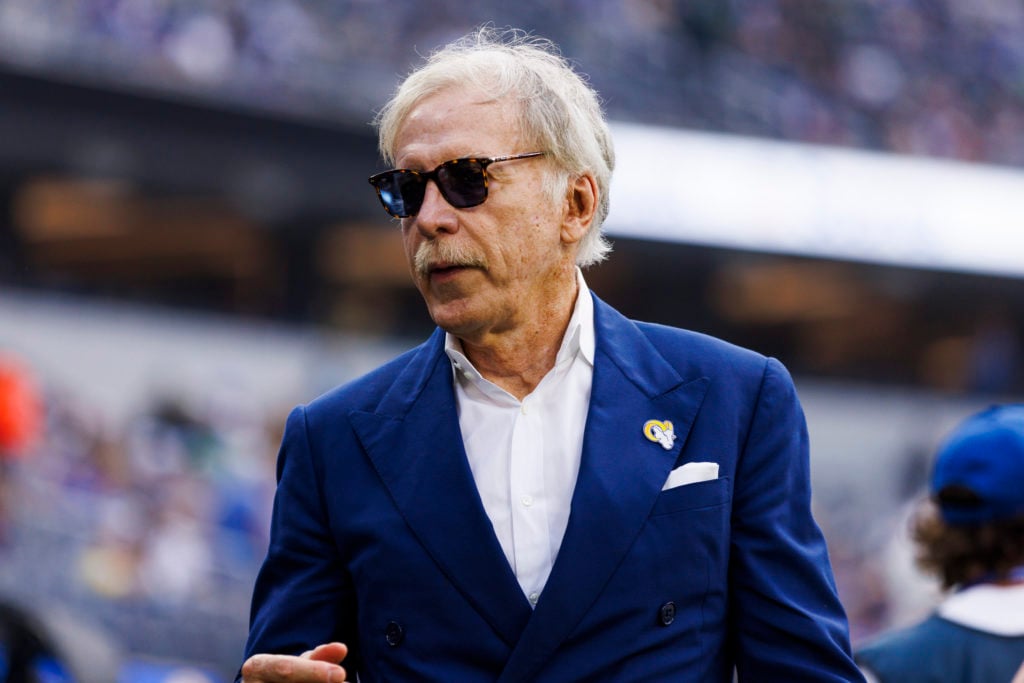
For the 78-year-old real estate and sports mogul, that’s chump change.
He is worth £17.5bn in total. His sports empire alone – which also boasts franchises in the NFL, NBA and NHL – was recently valued at £15bn. But it does beg the question, when and how does Kroenke plan on cashing out?
Key Stan Kroenke investments
| Business | Category |
| Los Angeles Rams | NFL – Sports Franchise |
| Denver Nuggets | NBA – Sports Franchise |
| Colorado Avalanche | NHL – Sports Franchise |
| Colorado Rapids | MLS – Sports Franchise |
| Colorado Mammoth | NLL – Sports Franchise |
| Arsenal F.C. and W.F.C | Premier League, WSL – Sports Franchise |
| The Guard (Gladiators / Guerrillas) | Esports – Overwatch / CoD / Valorant |
| Altitude Sports & Entertainment | Media – Regional Sports Network |
| Ball Arena | Venue – Multipurpose Arena |
| SoFi Stadium | Venue – NFL Stadium |
| Hollywood Park Development | Real Estate – Entertainment District |
Arsenal will post a profit for the first time in seven years when they release their financial statements for 2024-25 early next year.
Zoom out on the graph, however, and you’ll see that the Gunners have still lost over £300m since Kroenke took outright control in 2018.
It’s not at all uncommon for the owner of a Premier League club to have a highly concentrated position like this. In fact, it’s almost unheard of for a shareholder to make money before the point of exit – and even then, the sale price doesn’t always represent a profit on total investment.

In Kroenke’s case, it looks like a capital appreciation model: buy low, sell high. That is as opposed to getting to a point where the club generates enough cash year-on-year for the owners to take a dividend.
In all likelihood, Josh Kroenke will inherit the club. The 45-year-old son of Stan has been the public face of the regime in North London for several years now. But either way, when will the Kroenkes get to a place where they think they have reached peak value and liquidate their position?
One thing is for sure here – glory on the pitch is just one factor among many. The enterprise values of elite European clubs as measured by the likes of Forbes, Bloomberg, Football Benchmark, Sportico and more have trended up and to the right regardless of the silverware they accrue.

But success on the pitch begets success in the commercial department, of course. To borrow an adage from motorsport, it’s a case of ‘win on Sunday, sell on Monday’.
Arsenal were stuck in the mud commercially for several years, and that coincided with their absence from the Champions League.
The reawakening under Mikel Arteta has now ended that stasis, with the latest news from the Emirates emblematic of the link between sporting and financial success.
Arsenal poised to announce fifth sponsor in quick succession, £250m boost awaits
Over the last decade, Arsenal have underperformed commercially relative to their peer group in the so-called Big Six.
Manchester United, Manchester City, Liverpool, Tottenham and Chelsea have all brought in more money from sponsorship, retail and events than the Gunners, and sometimes by an order of magnitude.

However, as well as attempting to use the Emirates for more lucrative non-football events, Arsenal have been aggressively expanding their sponsorship portfolio under the guidance of chief commercial officer Juliet Slot.
A new centralised KSE sponsorship sales unit, christened Kroenke Signature Properties, has meanwhile been set up to squeeze as much value as possible from brand partnerships across the network.
So far this summer, Arsenal have struck deals with Asahi Super Dry, Airwallex, Guinness and, today, Stanley 1913. According to football finance analyst Lukasz Baczek, those deals will deliver an additional £10m in revenue.
Every Arsenal sponsor
| Adidas | Emirates | Sobha Realty |
| Visit Rwanda | Airwallex | Asahi |
| Athletic Brewing Co | ComAve | Chivas Regal |
| Google Pixel | Guiness | Hotels.com |
| eFootball | MG | NTTDATA |
| Persil | ZC Rubber | Cadbury |
| LavAzza | TCL | Stanley 1913 |
Based on projections from fellow football finance writer Greg Cordell, that will almost certainly take Arsenal’s commercial revenue past the £250m mark in 2025-26.
Cordell forecasts that Arsenal will have made around £241m from this category in 2024-25.
What’s more, Baczek has reported that Arsenal are in talks with an American soft drinks brand with a view to striking their fifth potential partnership of the summer.
Recently, Arsenal ditched their hydration partner, Prime. The new sponsor will likely fill that category.
- READ MORE: Arsenal to cash in as £12bn deal kicks in at Premier League HQ, it’s key for Stan Kroenke
Arsenal’s commercial income key to Stan Kroenke dodging more cash injections, says Kieran Maguire
At an operating level, Arsenal are one of the most profitable clubs in the world. However, as this summer is proving, the costs of player investment place a strain on resources.
When the Gunners finally signed Viktor Gyokeres from Sporting CP last week, it took their total expenditure close to the £200m mark. With Eberechi Eze, Rodrygo and Xavi Simmons all linked with a move to the Emirates, it seems likely there will be at least one more Hollywood addition before the deadline.
To fund this level of expenditure without resorting to handouts from Kroenke, continuing to push the envelope with commercial income is crucial, explains Kieran Maguire.
“Arsenal slipped off the radar for a few seasons,” the University of Liverpool football finance expert said in exclusive conversation with TBR Football.
“They were paying inflated rates for mediocre players. That was reflected in not qualifying for the Champions League for a long period of time. That operational issue appears to have been addressed.
“But nowadays, you have to run to stand still as far as revenue generation is concerned because if you don’t get it right there are other smart cookies within the elite club bracket who are ready to take advantage.
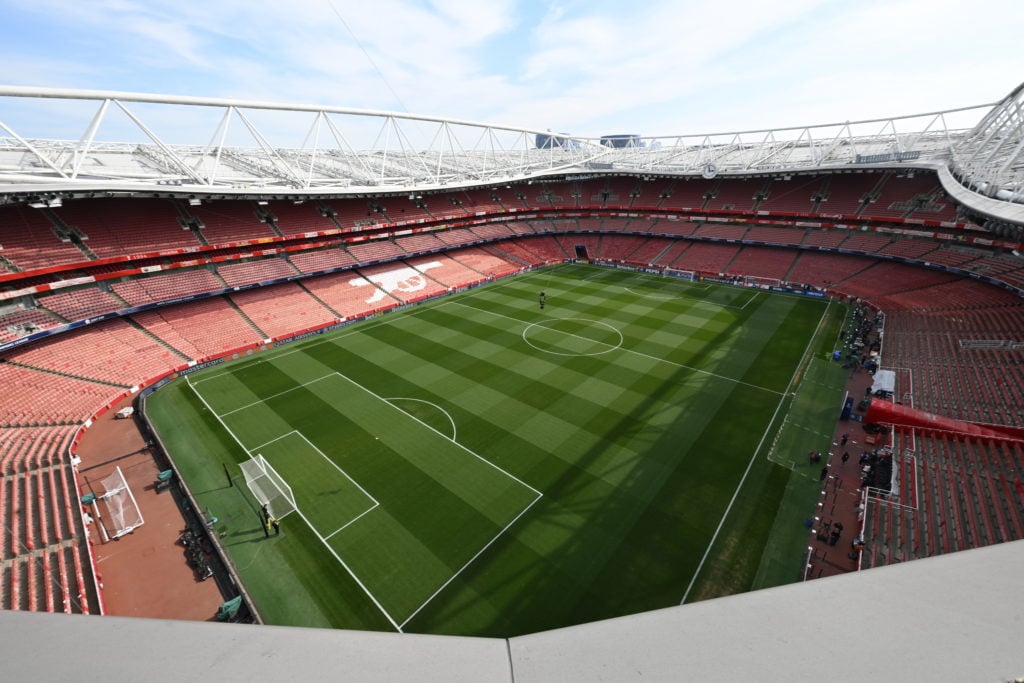
“Trying to broaden their commercial base is good. They have got the benefits of being a London club and a global brand. They have got to use commercial income because, although there are discussions about extending the Emirates to 80,000, I think that’s on the wish list rather than a to-do list at present. The benefits certainly won’t be seen for the rest of this decade.
“Football is a very short-term industry in terms of how you measure success. KSE have either got to put money in themselves, which they are reluctant to do – and he is called ‘Silent Stan’ for a reason – or they have got to leverage their position and extract maximum commercial potential for their brand.”
Receive weekly football news and updates to your mailbox