
 Arsenal
 Aston Villa
 Chelsea
 Crystal Palace
 Everton
 Fulham
 Leeds United
 Liverpool
 Manchester City
 Manchester United
 Newcastle United
 Nottingham Forest
 Sunderland
 Tottenham Hotspur
 West Ham United
 Wolverhampton Wanderers


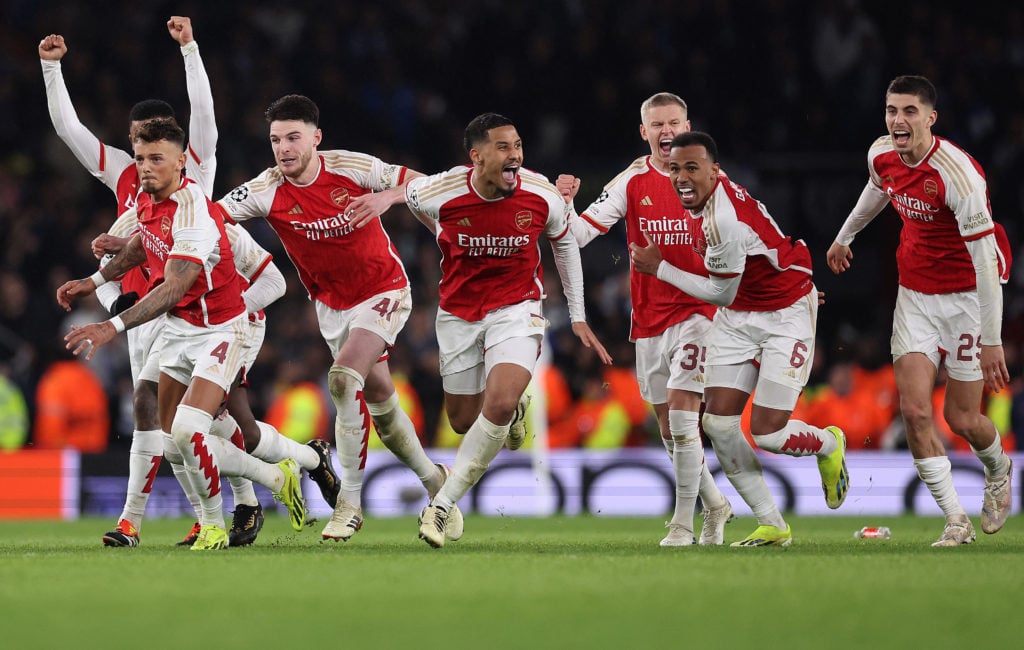
Arsenal’s return to the Champions League last season buoyed the fanbase, and their participation on European football’s grandest stage has been a game-changer financially.
The Gunners are one of the most recognisable brands in world football, but their absence from the Champions League has made it harder to attract the highest paying sponsors in recent years.
But the upturn in fortunes on the pitch delivered by Mikel Arteta is now starting to bear fruit in the commercial department once again.
Arsenal’s deals with Adidas, Emirates and Visit Rwanda and are worth approximately £130m per season, and the benefits of the training ground naming rights deal with Sobha Realty will be laid bare when the club releases its accounts for 2023-24.
They are also incrementally increasing the breadth of their sponsorship portfolio, signing new deals with Athletic Brewing Company and an as yet unnamed partner over the last few weeks.
But the biggest individual revenue drivers remain the Premier League and Champions League’s media deals.
Broadcast income accounted for £193m of revenue in the last financial year alone.
And that figure is set to soar next season thanks to the controversial but lucrative new Champions League format.
- READ MORE ARSENAL NEWS: ‘Unbelievable’ Arsenal player Mikel Arteta loves could be about to sign a new five-year contract
Sony commercial deal set to boost Arsenal coffers
The Champions League’s lists Heineken, PlayStation, Lays, FedEx, Mastercard and Just Eat as its six principle sponsors.
UEFA announced late last week that Sony Interactive, the company behind PlayStation, had extended their deal for the 2024-27 rights cycle.
Over the course of the contract, the new deal is expected to be worth in excess of £140m for UEFA.
That cash will be distributed to clubs based on several different metrics.
UEFA say that the controversial coefficient-based metrics, which financially rewards clubs based on their performance over the last 10 years, will be scaled back next season.
We are yet to see the full details of the new structure, but Arsenal – whose coefficient was once one of the highest but has now fallen – will hope that the reconfiguration will prove more lucrative for them.
How Arsenal can boost commercial income and, by extension, the transfer budget
Stan Kroenke – and to a greater extent his son, Josh, who has taken more of a front seat at the Emirates in recent years – favour a self sufficient model.
They have been less conservative in the transfer market in recent years, but the owners do not want to continuously bankroll financial losses like the owners of, for example, Chelsea and Newcastle.
Any uptick in spending therefore must correlate with a rise in revenue, and commercial income is where the North London club see the biggest and most easily realisable potential.
Arsenal’s partnership with Adidas has seen them branch out into streetwear, which is expected to yield greater sales and brand exposure in the United States and East Asia.
Josh Kroenke meanwhile has recently disclosed that the club has conducted preliminary internal talks about expanding the Emirates Stadium.
As well as providing a matchday income boost, that would allow the club greater commercial scope through better technology partnership and a greater value proposition to sponsors.
Receive weekly football news and updates to your mailbox